Priority Needs Index for Developing Approaches to Enhance Teachers’ Growth Mindset in Learning Management at Educational Opportunity Expansion Schools
DOI:
https://doi.org/10.14456/psruhss.2025.35Keywords:
Priority needs index, Enhancement strategies, Growth mindset, Learning management, Educational opportunity expansion schoolsAbstract
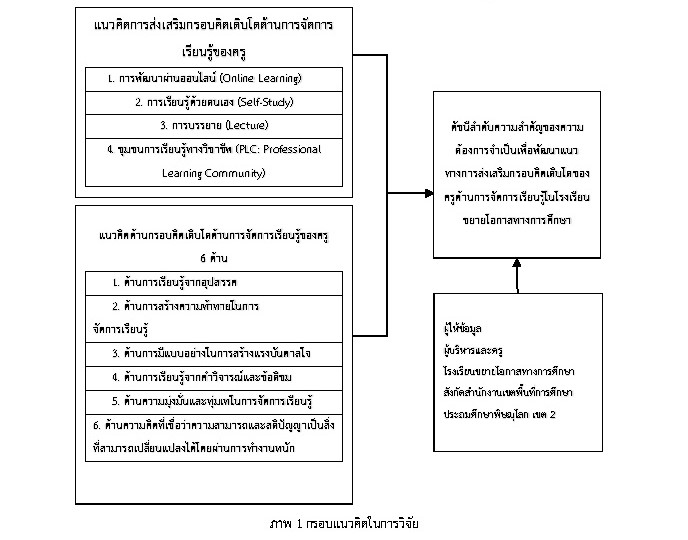
The research aimed to study: 1) the needs for approaches of enhancement learning management of teachers at educational opportunity expansion, and 2) the needs for growth mindset for learning management of teachers at educational opportunity expansion schools under office of the basic education commission. The sample group, selected using Purposive Sampling, consisted of 37 administrators and Stratified Random Sampling, consisted of 260 teachers in educational opportunity expansion schools. The research instrument used for collecting data was a dual-response format questionnaire. The data were analyzed using mean, standard deviation, and Modified Priority Needs Index (PNIModified).
The research revealed the following findings. 1)The needs for approaches of enhancement learning management of teachers at educational opportunity expansion schools were respectively sorted descending order of the needs as follows: The highest was (1) approaches for the enhancement of online learning, followed by (2) approaches of enhancement of self-study, (3) approaches of enhancement of PLC (Professional learning community), and (4)approaches of enhancement of lecture. 2) The needs for growth mindset for learning management of teachers at educational opportunity expansion schools were respectively sorted descending order of the needs as follows: The highest was (1) learning from criticism and feedback, followed by ( (2) creating challenges in learning management, (3) having role models to inspire, (4) Learning from criticism and feedback, (5) Determination and dedication in learning management, and (6) Belief about abilities and intelligence can be changed by work.
References
จิราภรณ์ พรมจันทร์. (2563). การพัฒนารูปแบบการบริหารชุมชนแห่งการเรียนรู้ทางวิชาชีพเพื่อพัฒนาการจัดการเรียนรู้ของครู. วารสารการบริหารการศึกษา, 8(1), 45-52.
ฉันทนา ภุมมา. (2564). รูปแบบชุมชนการเรียนรู้ทางวิชาชีพตามหลักกัลยาณมิตรของโรงเรียนขยายโอกาสทางการศึกษา สังกัดสำนักงานเขตพื้นที่การศึกษาประถมศึกษา (ปริญญานิพนธ์ดุษฎีบัณฑิต). พระนครศรีอยุธยา: มหาวิทยาลัยมหาจุฬาลงกรณราชวิทยาลัย.
ชูขวัญ รัตนพิทักษ์ธาดา และประทุมทอง ไตรรัตน์. (2566). สมรรถนะของผู้นำทางการศึกษาเพื่อการอยู่รอดและเติบโตในยุค BANI World. วารสารวิชาการสถาบันวิทยาการจัดการแห่งแปซิฟิก, 9(1), 16–28.
ไทยโพสต์. (2565). ปลัด ศธ. ชี้โลกเข้าสู่ยุคBANI World รวมความปั่นป่วนไว้ทั้งหมด กระทบการศึกษาโดยตรง มอบนโยบายรับมือ อุดเรียนรู้ถดถอย. สืบค้น 18 สิงหาคม 2567, จาก https://www.thaipost.net/educationnews/255668/
ธนกร สุทธิสนธ์ และเผ่าไทย วงศ์เหลา. (2566). รูปแบบการพัฒนาการประยุกต์ใช้แอปพลิเคชันในการจัดการเรียนรู้เพื่อรองรับแนวโน้มการศึกษาในศตวรรษที่ 21. วารสารวิทยาการจัดการ มหาวิทยาลัยราชภัฏอุดรธานี, 5(3), 45–60.
บุญชม ศรีสะอาด. (2560). การวิจัยเบื้องต้น (พิมพ์ครั้งที่ 10). กรุงเทพฯ: สุวีริยาสาส์น.
ปัทมาภรณ์ ศรีราษฎร์. (2561). แนวทางการพัฒนากรอบความคิดแบบเติบโตของครู. วารสารอิเล็กทรอนิกส์ทางการศึกษา OJED, 13(1), 389-399.
วันเพ็ญ วงษ์จันทร์. (2562). การพัฒนารูปแบบการนิเทศด้วยชุมชนการเรียนรู้ทางวิชาชีพ (PLC) เพื่อส่งเสริมการจัดการเรียนรู้เชิงรุกของครูระดับประถมศึกษา. วารสารการพัฒนาวิชาชีพครู, 9(1), 1-10.
วัลลภ รัฐฉัตรานนท์. (2562). การหาขนาดตัวอย่างที่เหมาะสมสำหรับการวิจัย: มายาคติในการใช้สูตรของ ทาโร ยามาเน่ และเครทซี-มอร์แกน. วารสารสหวิทยาการวิจัย: ฉบับบัณฑิตศึกษา, 8(1), 11–28.
ศูนย์จิตวิทยาการศึกษา มูลนิธิยุวสถิรคุณ. (2562). การพัฒนากรอบแนวคิด. สืบค้น 18 สิงหาคม 2567, จาก http://www.cepthailand.org
สำนักงานสภานโยบายการอุดมศึกษา วิทยาศาสตร์ วิจัยและนวัตกรรมแห่งชาติ. (2563). มาตรการด้านการอุดมศึกษาวิทยาศาสตร์ วิจัยและนวัตกรรมเพื่อรองรับการฟื้นฟูและปรับโครงสร้างเศรษฐกิจและสังคมของประเทศ. กรุงเทพฯ: สำนักงานสภานโยบายการอุดมศึกษา วิทยาศาสตร์ วิจัยและนวัตกรรมแห่งชาติ.
สุวิมล ว่องวานิช. (2562). การวิจัยประเมินความต้องการจำเป็น (พิมพ์ครั้งที่ 4). กรุงเทพฯ: จุฬาลงกรณ์มหาวิทยาลัย.
อัษฎา พลอยโสภณ. (2564). นักศึกษาครูกับการพัฒนากรอบแนวคิดแบบเติบโต. วารสารมนุษยศาสตร์และสังคมศาสตร์ มหาวิทยาลัยราชภัฏสงขลา, 3(2), 115–130.
Barr, R. B., & Tagg, J. (1995). From teaching to learning—A new paradigm for undergraduate education. Change: The magazine of higher learning, 27(6), 12-26.
Dweck, C. S. (2006). Mindset: The new psychology of success. New York: Random.
Gregory, A., & Deroy, R. (2015). Developing a growth mindset in teachers: A model for changing educational practice. Teaching and Teacher Education, 51, 89–98.
Harris, A., & Muijs, D. (2004). Improving schools through teacher leadership. London, UK: Open University Press.
Johnson, M., & Lee, K. (2018). Utilizing exemplars in teacher development. Teaching and Teacher Education, 74, 123–134.
Kraft, M. A., & Papay, J. P. (2014). Can teacher evaluation improve teaching? Educational Researcher, 43(6), 294–303. https://doi.org/10.3102/0013189X14550275
Lee, J., & Kim, H. (2019). Creating challenges in learning: Applications in the classroom. Educational Psychology Review, 31(2), 345–360.
Ndongfack, M. N. (2015). Teacher profession development on technology integration using the mastery of active and shared learning for techno-pedagogy (MASLEPT) model. Creative Education, 6(3), 295–308. https://doi.org/10.4236/ce.2015.63028
Rattanawong, P., & Chanchareon, S. (2020). The role of teachers’ mindsets in promoting student motivation and achievement. Journal of Educational Psychology, 112(5), 1001–1015.
Winter, E., Costello, A., O’Brien, M., & Hickey, G. (2021). Teachers’ use of technology and the impact of Covid-19. Irish educational studies, 40(2), 235-246.
Downloads
Published
How to Cite
Issue
Section
License
Copyright (c) 2025 Humanities and Social Sciences Journal of Pibulsongkram Rajabhat University

This work is licensed under a Creative Commons Attribution-NonCommercial-NoDerivatives 4.0 International License.
Any articles or comments appearing in the Journal of Humanities and Social Sciences, Rajabhat Phibulsongkram University, are the intellectual property of the authors, and do not necessarily reflect the views of the editorial board. Published articles are copyrighted by the Journal of Humanities and Social Sciences, Rajabhat Phibulsongkram University.