Teachers’ Perceptions of Pedagogical Content Knowledge for STEM: A Case Study of a Secondary School in Phitsanulok
DOI:
https://doi.org/10.14456/psruhss.2025.32Keywords:
STEM education, PCK for stem, In-service teacherAbstract
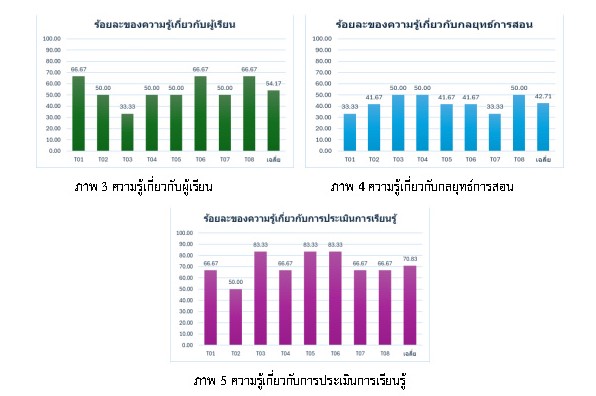
This research aimed to explore science and mathematics teachers’ perception of pedagogical content knowledge (PCK) for STEM in a secondary school in Phitsanulok where STEM education course is taught. The participants were thirty-six in-service teachers who were the members of the school’s science and mathematics division. Three research instruments were employed to collect data: 1) a questionnaire on teachers’ perception of PCK for STEM, 2) a semi-structured interview protocol, and 3) classroom observation protocol. The data were analyzed using descriptive statistics and content analysis. The findings indicated that the in-service science teachers perceived to have PCK for STEM at a good level in every component. However, when considering the details of each component, it was found that the participating teachers perceived to have the knowledge of curriculum and instructional strategies at a low level. They reported to be unable to set goals or objectives of the curriculum nor to be able to analyze learning misconceptions or difficulties of students. They were not skilled in teaching STEM content that did not belong to the field of study they graduated from and lacked a deep understanding of the engineering design process.
References
ชุติมา วิชัยดิษฐ และชาตรี ฝ่ายคำตา. (2564). การรับรู้เกี่ยวกับความรู้ในเนื้อหาผนวกวิธีสอนสะเต็มศึกษาของครูวิทยาศาสตร์. วารสารศึกษาศาสตร์ มหาวิทยาลัยนเรศวร, 23(2), 152-168.
ประดับชัย อินมณี, สิรินภา กิจเกื้อกูล และอริสรา จุลกิจวัฒน์. (2567). มุมมองและแนวปฏิบัติการจัดการเรียนรู้แบบสะเต็มศึกษาของครูวิทยาศาสตร์ในโรงเรียนขนาดใหญ่เขตภาคเหนือตอนล่าง. วารสารการศึกษาและนวัตกรรม, 26(4), 242-253.
ปัฐมาภรณ์ พิมพ์ทอง. (2566). การจัดการเรียนรู้สะเต็มศึกษา (พิมพ์ครั้งที่ 2). กรุงเทพฯ: สุนทรฟิล์ม.
Allen, M., W., W. A., & Matthews, C. E. (2016). Adaptive Teaching in STEM: Characteristics for Effectiveness. Theory Into Practice, 55(3), 217-224.
Aydin-Gunbatar, S., Ekiz-Kiran, B., & Oztay, E. S. (2020). Pre-service chemistry teachers’ pedagogical content knowledge for integrated STEM development with LESMeR model [10.1039/D0RP00074D]. Chemistry Education Research and Practice, 21(4), 1063-1082.
Bybee, R.W. (2014). NGSS and the Next Generation of Science Teachers. Journal of Science Teacher Education, 25(2), 211-221.
Chan, K. K. H., Yeh, Y.-F., & Hsu, Y.-S. (2019). A Framework for Examining Teachers’ Practical Knowledge for STEM Teaching. In Asia-Pacific STEM Teaching Practices : From Theoretical Frameworks to Practices (pp. 39-50). Singapore: Springer Singapore.
Cunningham, C. M., & Carlsen, W. S. (2014). Teaching Engineering Practices. Journal of Science Teacher Education, 25(2), 197-210.
Juhler, M. V. (2016). The Use of Lesson Study Combined with Content Representation in the Planning of Physics Lessons During Field Practice to Develop Pedagogical Content Knowledge. Journal of Science Teacher Education, 27(5), 533-553.
Lau, M., & Multani, S. (2018). Engineering STEM Teacher Learning: Using a Museum-Based Field Experience to Foster STEM Teachers' Pedagogical Content Knowledge for Engineering (Advances in STEM Education, Issue.
Magnusson, S., Krajcik, J., & Borko, H. (1999). Nature, Sources, and Development of Pedagogical Content Knowledge for Science Teaching. In Examining Pedagogical Content Knowledge : The Construct and its Implications for Science Education (Vol. 6, pp. 95-132). Dordrecht: Springer Netherlands.
Ring, E. A., Dare, E. A., Crotty, E. A., & Roehrig, G. H. (2017). The Evolution of Teacher Conceptions of STEM Education Throughout an Intensive Professional Development Experience. Journal of Science Teacher Education, 28(5), 444-467.
Roehrig, G. H., Moore, T. J., Wang, H.-H., & Park, M. S. (2012). Is Adding the E Enough? Investigating the Impact of K-12 Engineering Standards on the Implementation of STEM Integration. School Science and Mathematics, 112(1), 31-44.
Shulman, L. (1986). Those Who Understand: Knowledge Growth in Teaching. Educational Researcher, 15(2), 4-14.
Srikoom, W., Faikhamta, C., & Hanuscin, D. (2018). Dimensions of effective STEM integrated teaching practice. K-12 stem Education, 4(2), 313-330.
Yeh, Y.-F., & Hsu, Y.-S. (2019). Instructional knowledge of STEM: The voices of STEM teachers in Taiwan. Asia-Pacific STEM teaching practices: From theoretical frameworks to practices, 51-66.
Yıldırım, B., & Şahin-Topalcengiz, E. (2019). STEM pedagogical content knowledge scale (STEMPCK): A validity and reliability study. Journal of STEM Teacher Education, 53(2), 1–20. https://doi.org/10.30707/JSTE53.2Yildirim
Yin, R. K. (2009). Case study research : design and methods / Robert K. Yin. In (4th ed.): Sage Publications.
Downloads
Published
How to Cite
Issue
Section
License
Copyright (c) 2025 Humanities and Social Sciences Journal of Pibulsongkram Rajabhat University

This work is licensed under a Creative Commons Attribution-NonCommercial-NoDerivatives 4.0 International License.
Any articles or comments appearing in the Journal of Humanities and Social Sciences, Rajabhat Phibulsongkram University, are the intellectual property of the authors, and do not necessarily reflect the views of the editorial board. Published articles are copyrighted by the Journal of Humanities and Social Sciences, Rajabhat Phibulsongkram University.