กลยุทธ์การบริหารจัดการโรงเรียนเอกชนนอกระบบประเภทวิชาชีพ จังหวัดเชียงใหม่
DOI:
https://doi.org/10.14456/psruhss.2025.2คำสำคัญ:
กลยุทธ์ , การบริหารจัดการ , โรงเรียนเอกชนนอกระบบ , ประเภทวิชาชีพบทคัดย่อ
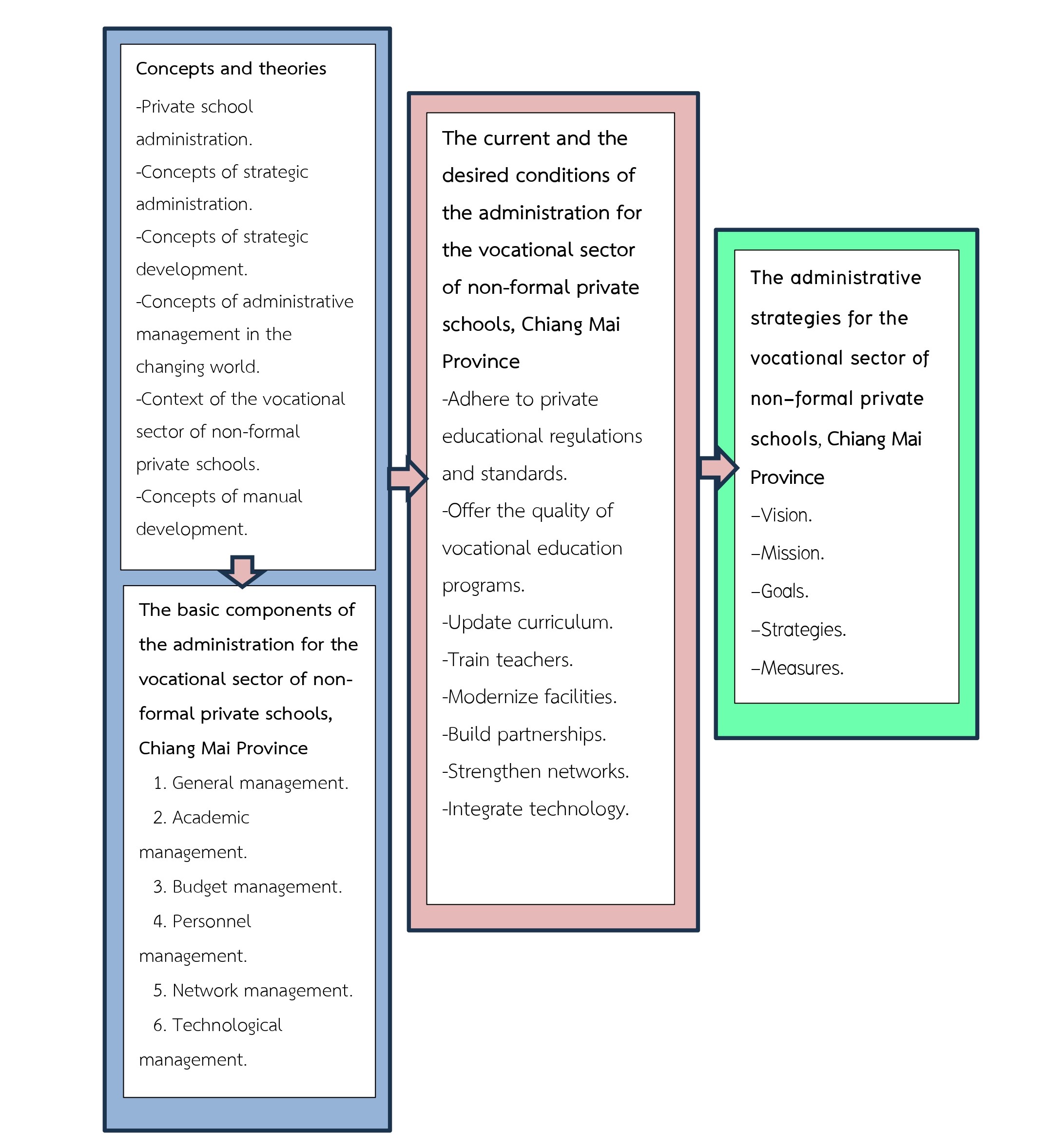
วัตถุประสงค์การวิจัยแบบผสานวิธีพหุระยะครั้งนี้ 1) เพื่อสังเคราะห์องค์ประกอบที่เกี่ยวข้องกับการบริหารจัดการโรงเรียนเอกชนนอกระบบประเภทวิชาชีพ จังหวัดเชียงใหม่ 2) เพื่อตรวจสอบความต้องการจำเป็นของการบริหารจัดการโรงเรียนเอกชนนอกระบบประเภทวิชาชีพ จังหวัดเชียงใหม่ และ 3) เพื่อพัฒนากลยุทธ์และคู่มือการขับเคลื่อนกลยุทธ์การบริหารจัดการโรงเรียนเอกชนนอกระบบประเภทวิชาชีพ จังหวัดเชียงใหม่ ผู้ให้ข้อมูล ในการศึกษาตามวัตถุประสงค์งานวิจัยเป็นผู้ทรงคุณวุฒิ จำนวน 133 คน เครื่องมือที่ใช้ในการเก็บรวบรวมข้อมูล ได้แก่ ตารางสังเคราะห์องค์ประกอบ แบบยืนยันองค์ประกอบ แบบสอบถาม สถิติที่ใช้ คือ ค่าร้อยละ ค่าความถี่ ค่าเฉลี่ย ส่วนเบี่ยงเบนมาตรฐาน และวิเคราะห์ความต้องการจำเป็น (PNI Modified) ผลการวิจัยพบว่า 1. องค์ประกอบที่เกี่ยวข้องกับการบริหารจัดการโรงเรียนเอกชนนอกระบบประเภทวิชาชีพ จังหวัดเชียงใหม่ หลังการยืนยัน ประกอบด้วย 6 องค์ประกอบหลัก ได้แก่ การบริหารทั่วไป การบริหารวิชาการ การบริหารงบประมาณการบริหารงานบุคคล การบริหารเครือข่าย และการบริหารเทคโนโลยี 2. ลำดับความต้องการจำเป็นในการบริหารจัดการโรงเรียนเอกชนนอกระบบประเภทวิชาชีพ จังหวัดเชียงใหม่ ประกอบด้วย ด้านการบริหารจัดการเทคโนโลยี อยู่ในลำดับที่ 1 (0.09) รองลงมา ด้านการบริหารจัดการงบประมาณ อยู่ในลำดับที่ 2 (0.07) ด้านการบริหารจัดการทั่วไป อยู่ในลำดับที่ 3 (0.06) และการบริหารจัดการวิชาการ (0.05) ตามลำดับ 3. กลยุทธ์การบริหารจัดการโรงเรียนเอกชนนอกระบบประเภทวิชาชีพ จังหวัดเชียงใหม่ ประกอบด้วย 1 วิสัยทัศน์ 4 พันธกิจ 1 เป้าประสงค์ 5 กลยุทธ์ 26 มาตรการ
เอกสารอ้างอิง
Asian Development Bank. (2014). Innovative Strategies in Technical and Vocational Education and Training for Accelerated Human Resource Development in South Asia. Retrieved from https://www.adb.org/publications/innovative-strategies-tech-voc-education-training-human-resource-development-south-asia
Chimnoy, W., Xupravati, P., & Siribanpitak, P. (2023). Academic management strategies of private elementary schools based on the concept of quality citizenship attributes in the 21st century. Kasetsart Journal of Social Sciences, 44(4), 1039-1050. https://doi.org/10.34044/j.kjss.2023.44.4.08
Choomwong, N., & Sethakajorn, S. (2020). Model of the Strategic Management for Private Schools under Office of the Private Education Commission in Nonthaburi Province. Journal of Humanities and Social Sciences, Rajapruk University, 6(3), 90 – 108. https://so03.tci-thaijo.org/index.php/rpu/article/view/248921
Eze, C. E., Eze, V. H., & Ugwu, N. J. (2023). Educational Administrative Strategies and Its Effect on Employers Job Performance: A Review. INOSR Journal of Experimental Sciences, 11(1), 67-76.
Manurung, P., Karimaliana, K., Ansi, R. Y., Harahap, D. A., Ginting, D., & Subagiharti, H. (2021). The involvement of non-formal education in students’ learning needs during the covid-19 epidemic. International Journal for Educational and Vocational Studies, 3(4), 287 – 292. https://doi.org/10.29103/ijevs.v3i4.5901
Office of the Education Council. (2019). Policy Recommendations for Non-formal Vocational Education Development in Thailand. Retrieved from http://backoffice.onec.go.th/uploads/Book/1926-file.pdf
Phandumri, K., Tunkaew, S., & Rattanachuwong, P. (2021). The Administration Strategies of Private Tutoring School Administration for New Normal Learning Management Standard. Journal of Education Academic, Chiang Rai Rajabhat University, 6(1), 25 - 44. https://so05.tci-thaijo.org/index.php/jeducrru/article/view/253410/173161
Saejeng, P., Muenjaem, S., Puthaprasert, C., & Poungkaew, P. (2024). The Components of the Administration for the Vocational Sector of Non-formal Private Schools, Chiang Mai Province. In Refereed Proceedings of the 24th. National Academic Conference and Research Presentations, Western Universities 3 July 2023 (pp.144-159). Phathum Thani: Western University. [In Thai]
Sukanan, T., & Lenanan, A. (2021). Strategies of network management for vocational skills development of schools in Secondary Education Service Area Office 10. The Golden Teak: Humanity and Social Science Journal (GTHJ.), 27(3), 188-201. [In Thai] https://so05.tci-thaijo.org/index.php/tgt/article/view/254709/171995
Supasiriroj, K., & Usaho, C. (2014). Management Strategies towards Excellence for Non-formal Private Music Schools. Journal of Education Studies, 52(4), 1-14. [In Thai] https://so02.tci-thaijo.org/index.php/EDUCU/article/view/31395/26972
Suwansujarit, S. (2022). Bid to help private schools in Thailand pull out of Covid-19 crisis. Retrieved from https://www.nationthailand.com/in-focus/40012824
Thai government gazette. (2008). Private School Act B.E. 2550 (2007). Retrieved from https://www.isat.or.th/local/public/_newsfile/PSA%20Amended%20B.E.%202554%20-%20ENG.pdf
Thai government gazette. (2015). Announcement of the Private Education Promotion Committee on the determination of school type and characteristics, teaching and learning management, and the curriculum of Non-formal Schools (No. 2) B.E. 2558. Retrieved from http://www.ratchakitcha.soc.go.th/DATA/PDF/2558/E/323/7.PDF [In Thai]
ดาวน์โหลด
เผยแพร่แล้ว
รูปแบบการอ้างอิง
ฉบับ
ประเภทบทความ
สัญญาอนุญาต
ลิขสิทธิ์ (c) 2025 วารสารมนุษยศาสตร์และสังคมศาสตร์ มหาวิทยาลัยราชภัฏพิบูลสงคราม

อนุญาตภายใต้เงื่อนไข Creative Commons Attribution-NonCommercial-NoDerivatives 4.0 International License.
บทความหรือข้อคิดเห็นใดใดที่ปรากฏในวารสารมนุษยศาสตร์และสังคมศาสตร์ มหาวิทยาลัยราชภัฏพิบูลสงครามเป็นวรรณกรรมของผู้เขียน ซึ่งบรรณาธิการไม่จำเป็นต้องเห็นด้วย บทความที่ได้รับการตีพิมพ์เป็นลิขสิทธิ์ของวารสารมนุษยศาสตร์และสังคมศาสตร์ มหาวิทยาลัยราชภัฏพิบูลสงคราม