The 21st issue of Dhammadhara Journal features the following seven articles:
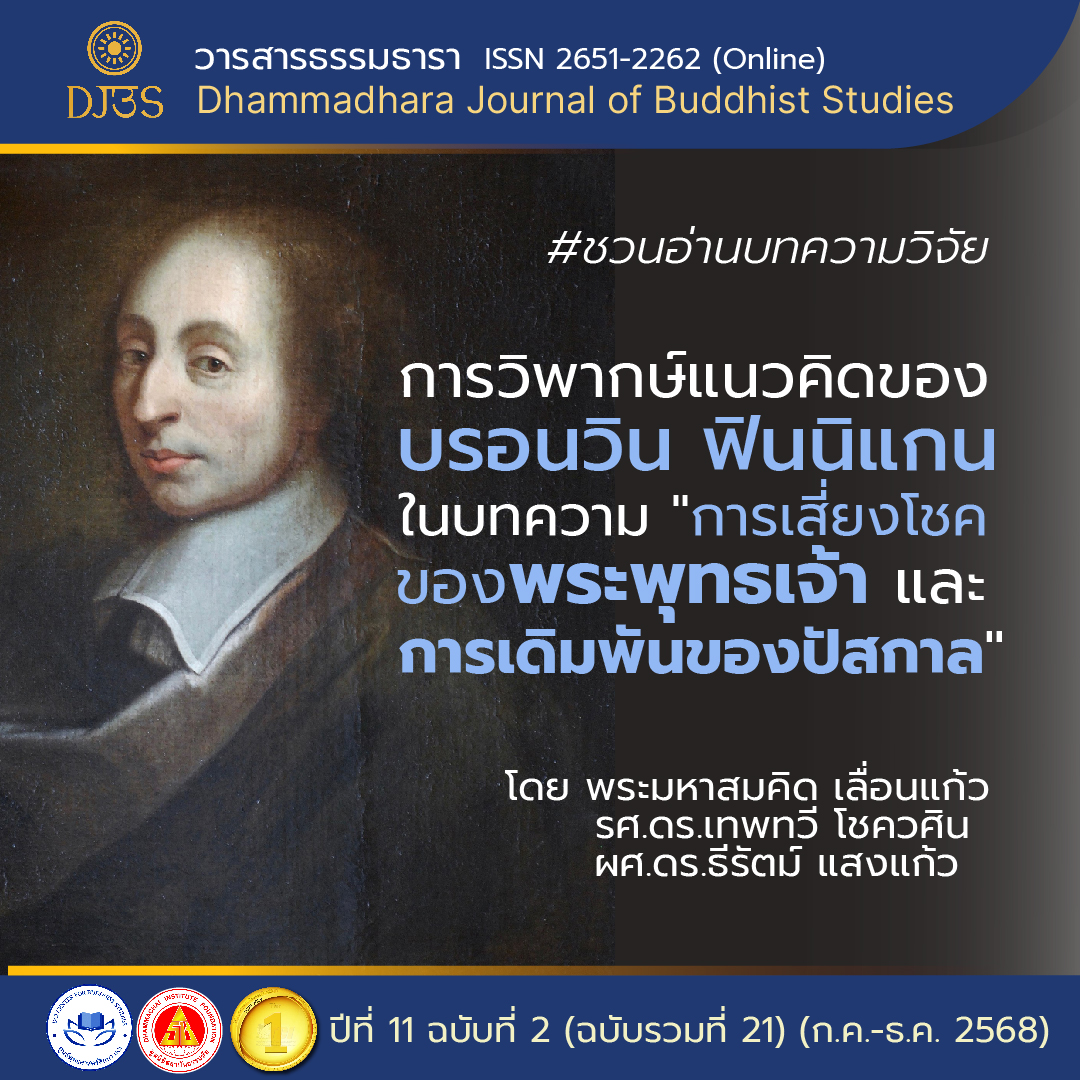
1. The research article titled “A Critique of Bronwyn Finnigan’s Ideas in the Article ‘The Buddha’s Lucky Throw and Pascal’s Wager’” by Phramaha Somkit Luankaew and Team presents a philosophical rebuttal of Finnigan’s ideas. The article critiques Finnigan’s comparative analysis of the Apannaka Sutta, as taught by the Buddha, and the theory known as Pascal’s Wager. This theory posits that everyone must eventually die, and only then will we know whether the afterlife, God, heaven, and hell truly exist. Those who believe in their existence will follow moral teachings, and if these things turn out to be real, they will enjoy eternal happiness in heaven. If not, they simply return to dust, suffering no loss. Thus, betting on God’s existence is considered the better choice. This aligns with the Apannaka Sutta, which teaches that those with right view—who believe in karma, heaven and hell—will do good and refrain from evil. While alive, they are praised by the wise; if the afterlife exists, they win in both realms—this world and the next. Conversely, those with wrong view commit evil while alive, are criticized by the wise, and if the afterlife exists, are reborn into suffering. Therefore, living according to right view is a better path.
Finnigan challenges several aspects of the Buddha’s teachings in the Apannaka Sutta, including perceived conflicts with the Kalama Sutta and the apparent incompatibility of the doctrine of anattā with the concept of rebirth. The present article offers a systematic philosophical rebuttal to Finnigan’s assertions, employing coherent and well-reasoned arguments that contribute meaningfully to ongoing scholarly discourse.
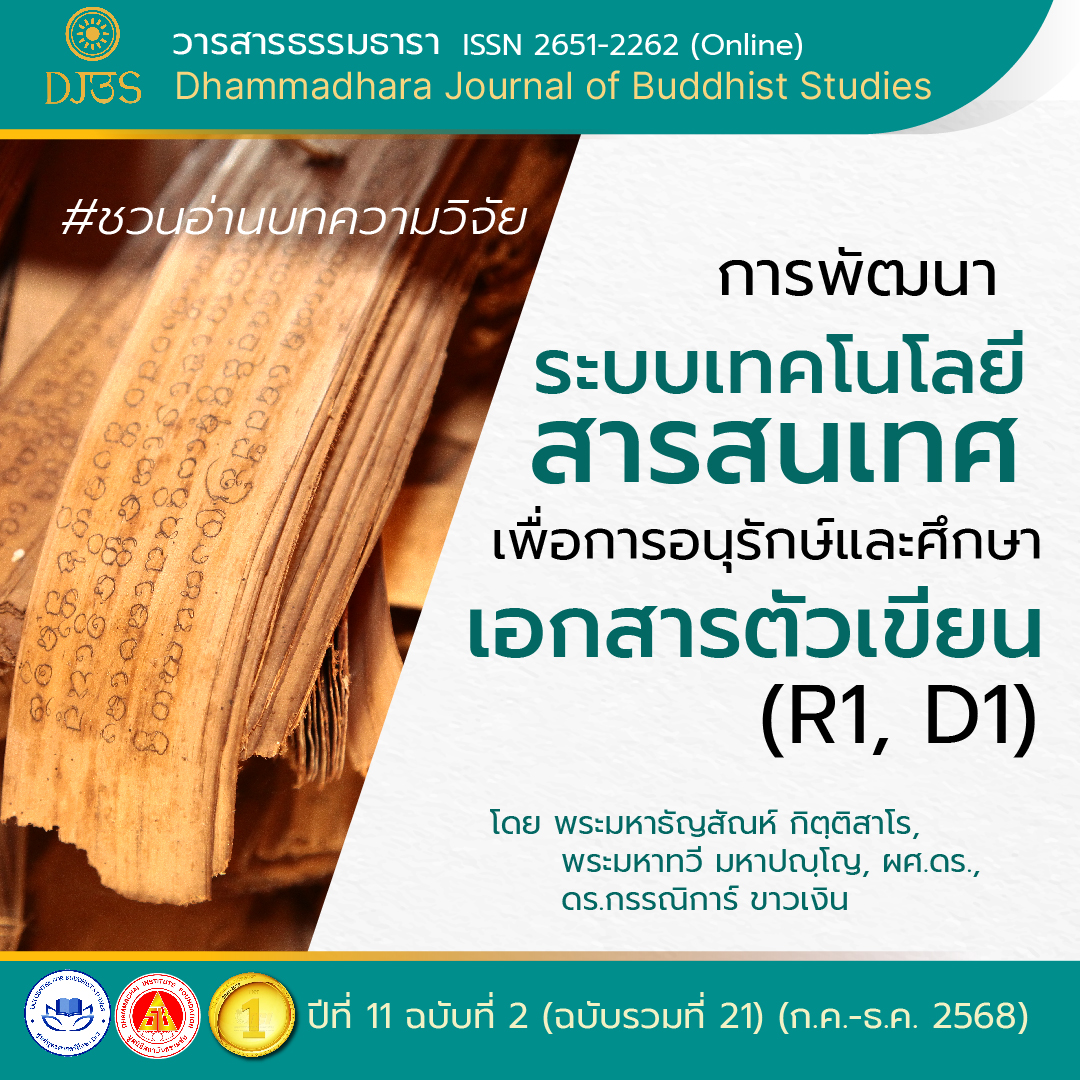
2. The research article titled “Development of Information Technology System for Conservation and Study of Manuscripts (R1, D1)” by Phramaha Thunsun Kittisaro and Team examines manuscript documents, which are records created by hand through writing or drawing and inscribed on various materials such as stone inscriptions, palm leaf manuscripts, or traditional Thai folding books. These documents constitute a vast intellectual heritage of the Thai ancestors, yet a significant portion has deteriorated over time, which is regrettable. The authors investigated the current application of information technology systems in the conservation and study of such manuscripts, identifying existing strengths and weaknesses. They further proposed developmental strategies to enhance these systems, thereby contributing significantly to the preservation, storage, research, and study of manuscript documents.
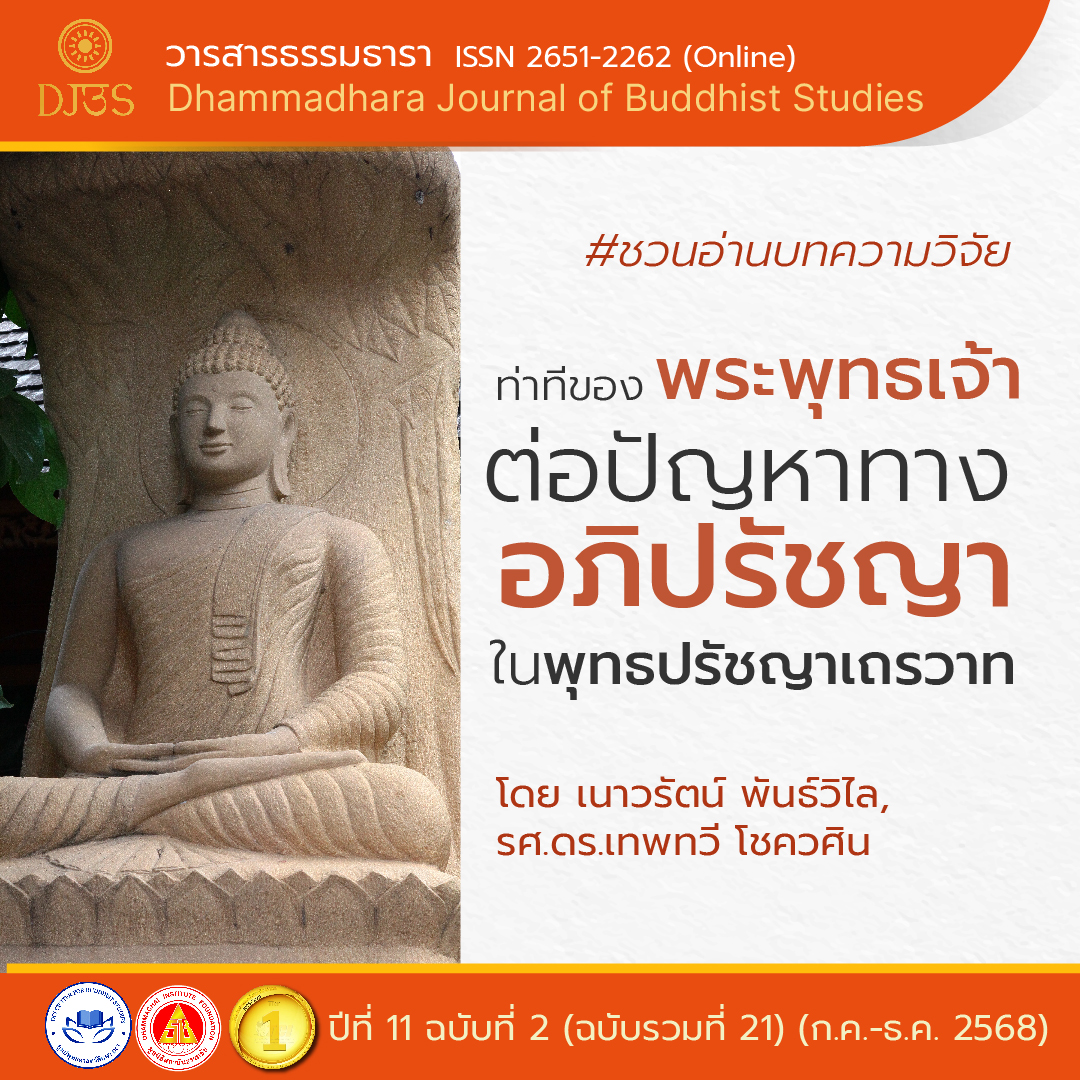
3. The research article titled “The Buddha’s Attitudes on Metaphysical Questions in Theravada Buddhist Philosophy” by Miss Naowarat Panwilai and Team explores the categorization of metaphysical questions in the context of Theravada Buddhism. The study finds that these questions can be divided into two main groups: (1) questions the Buddha chose not to answer, which are often associated with extreme or speculative views; and (2) questions the Buddha did answer, which primarily concern the relationship between human beings and the external world—for example, teachings on the five aggregates (pañcakkhandha) as non-self (anattā) and the law of karma (kamma). These latter teachings are regarded as conducive to understanding the nature of reality and life, thereby supporting the path of Dhamma practice leading to liberation.
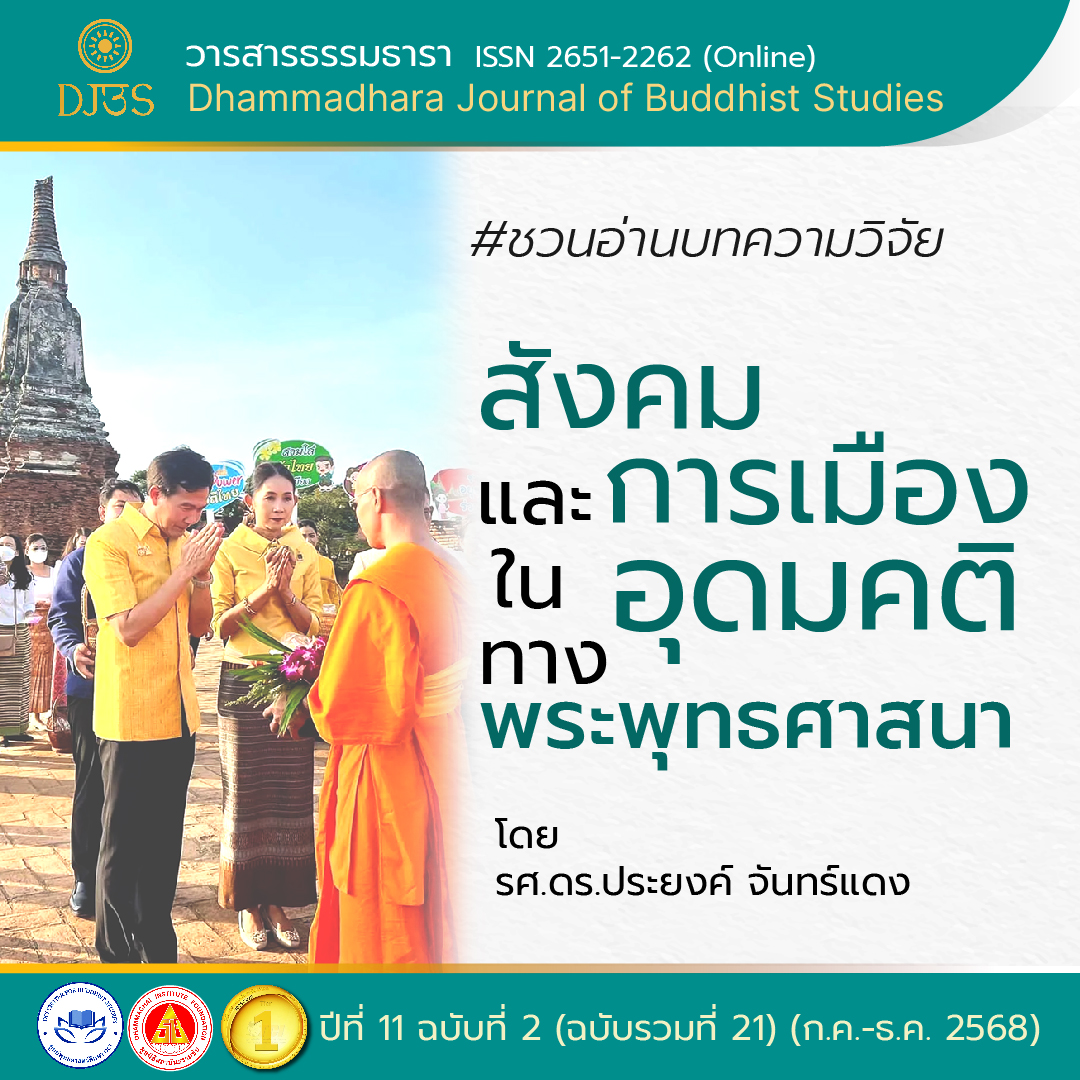
4. The research article titled “Socio-Political Ideology according to Buddhism” by Assoc.Prof. Prayong Jandaeng, Ph.D., examines the socio-political contexts found in the canonical texts of Theravada Buddhism in order to identify an ideal model of society and governance. The aim is to explore how Buddhist socio-political ideals may offer a potential resolution to the current state of political stagnation in contemporary Thai society.
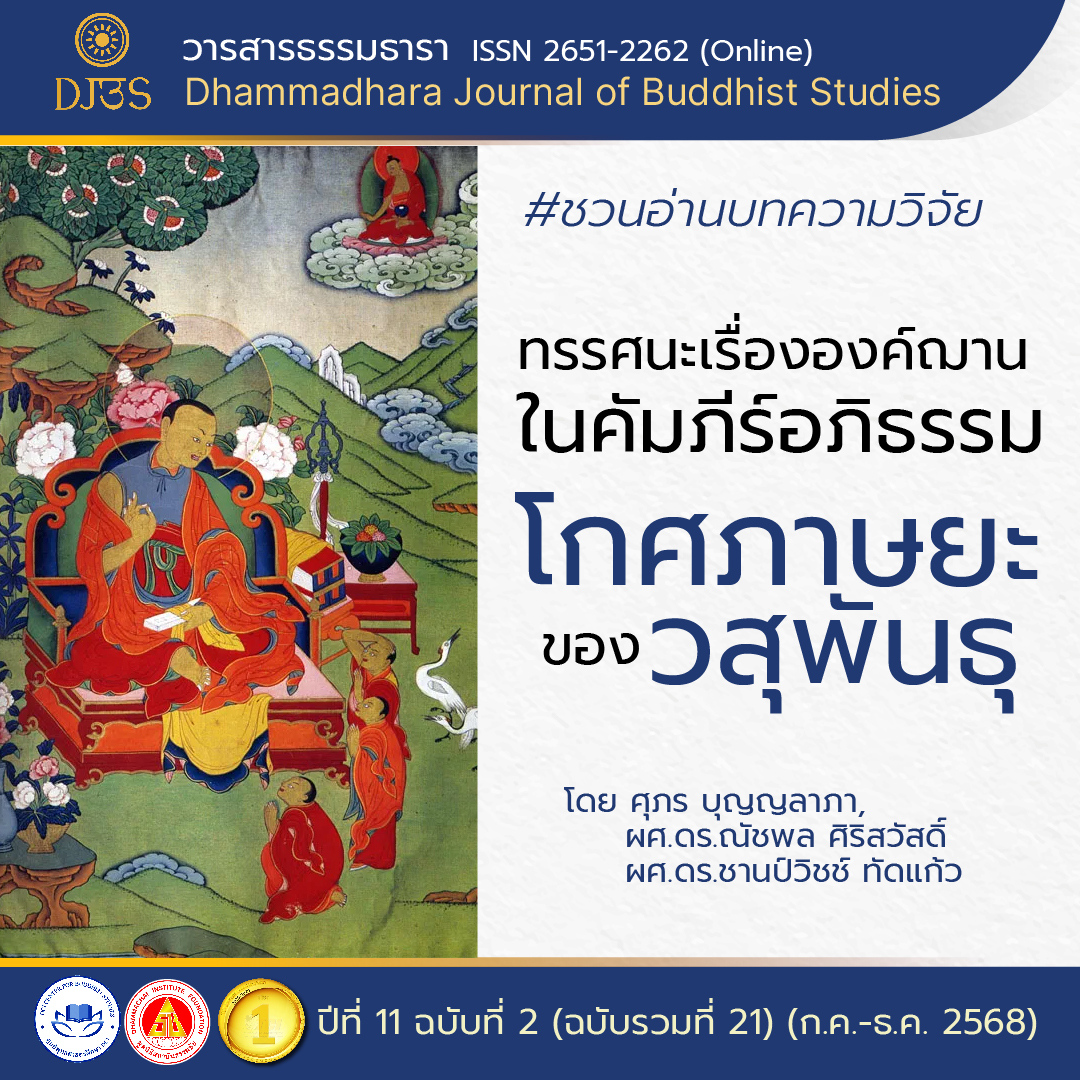
5. The research article titled “Viewpoints of Dhyānāṅga in Vasubandhu’s Abhidharmakośabhāṣya” by Miss Suporn Boonyalapa and Team investigates the reasons why Vasubandhu enumerates the factors of meditative absorption (dhyānāṅga) inconsistently across different sections of the Abhidharmakośabhāṣya. This study is particularly valuable for those interested in Buddhist thought from a broader perspective that extends beyond the Theravada tradition.
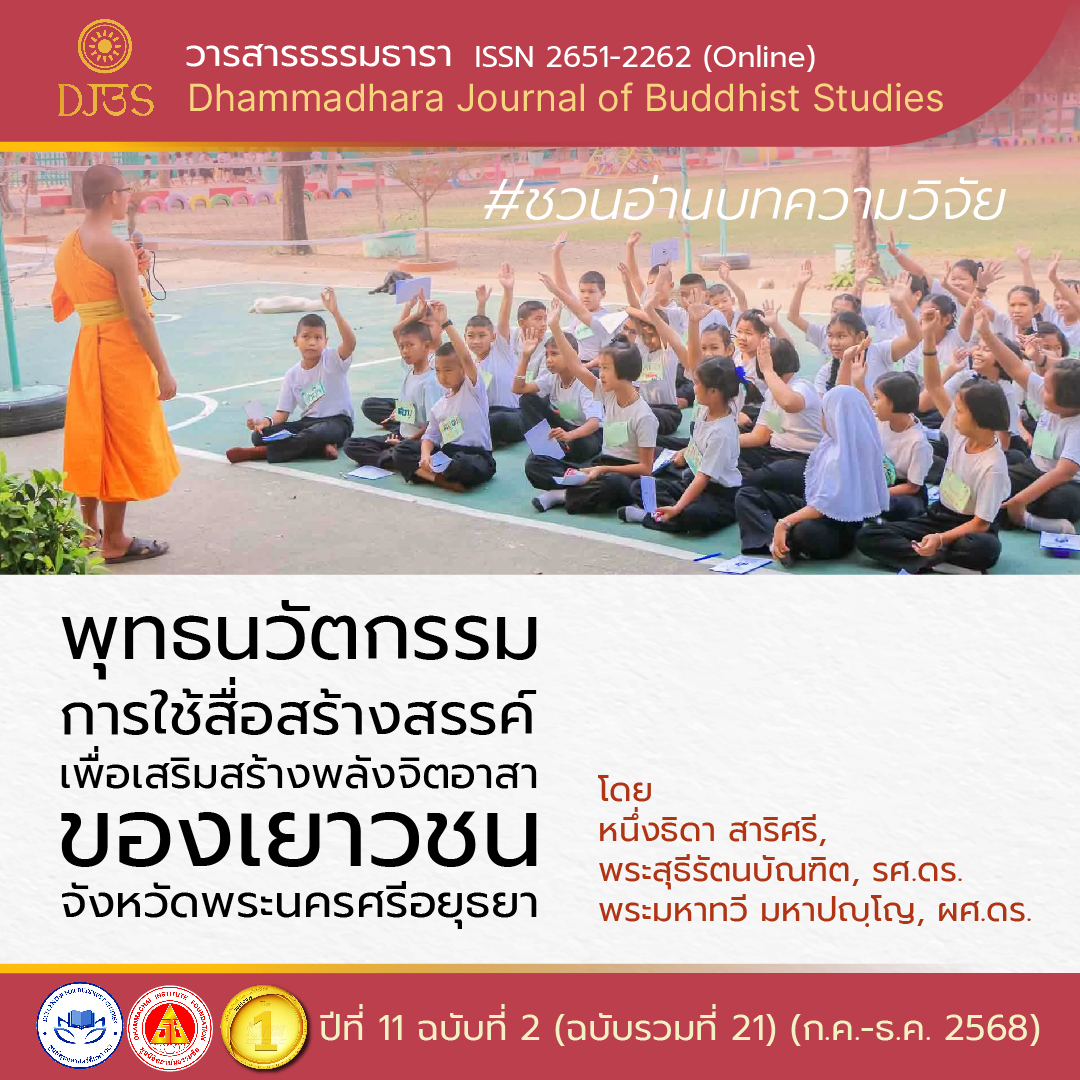
6. The research article titled “Buddhist Innovation in Using Creative Media to Strengthen Volunteer Spirit of Youth in Phra Nakhon Sri Ayutthaya Province” by Miss Nuengthida Sarisee and Team explores the integration of key Buddhist principles—namely the Threefold Training (Ti-sikkhā), the Four Bases of Social Harmony (Saṅgahavatthu), and wise reflection (Yonisomanasikāra)—in cultivating and promoting the qualities of volunteerism among youth.
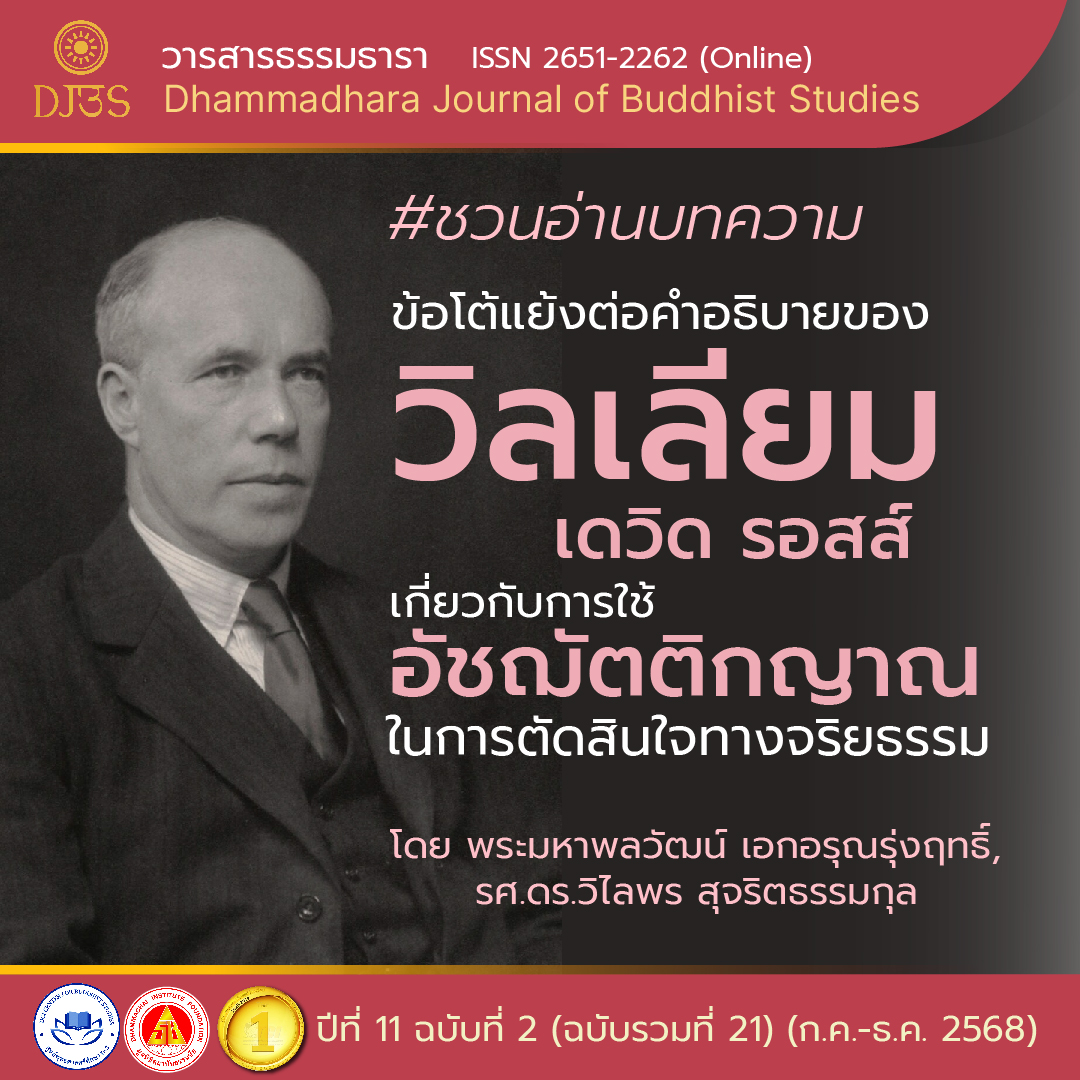
7. The article titled “An Argument Against William David Ross’s Explanation of the Use of Intuition in Moral Decision Making” by Phramaha Pollawat Ekarunrungrit and Assoc.Prof. Wilaiporn Sucharitthammakul, Ph.D., critically examines Ross’s concept of intuition—defined as an immediate inner knowing that does not require reasoning, proof, or inference, transcending the five sensory faculties. The study finds that Ross’s justificatory reasoning is flawed and internally inconsistent. Readers interested in in-depth philosophical analysis are encouraged to engage thoughtfully and reflectively with the article, which offers fresh insights and perspectives on the topic.
This 21st issue of Dhammadhara Journal marks a significant milestone in our continued journey, made possible through the collective dedication and support of esteemed scholars, a committed and capable editorial team, contributors of high-quality articles, and our valued readers. We are pleased to share that Dhammadhara Journal has successfully passed the quality evaluation conducted by the Thai-Journal Citation Index Centre (TCI), earning the distinction of being a Tier 1 academic journal for the evaluation period of B.E. 2568–2572 (2025–2029). Another piece of good news worth celebrating is that the Dhammadhara Journal of Buddhist Ideology for Development (DJBID), our closely affiliated new publication, has also been recognized by TCI as a Tier 2 academic journal for the same evaluation period.
Every member of our editorial team remains committed to continuously improving and elevating the quality of the journal. We sincerely hope to continue receiving your valuable guidance, support, and encouragement, as we have gratefully enjoyed in the past.
Phragrupalad Suvuttanabodhigun
(Somchai Thanavuddho)
11 July 2025
(Buddhist Lent Day)
1. The research article titled “A Critique of Bronwyn Finnigan’s Ideas in the Article ‘The Buddha’s Lucky Throw and Pascal’s Wager’” by Phramaha Somkit Luankaew and Team presents a philosophical rebuttal of Finnigan’s ideas. The article critiques Finnigan’s comparative analysis of the Apannaka Sutta, as taught by the Buddha, and the theory known as Pascal’s Wager. This theory posits that everyone must eventually die, and only then will we know whether the afterlife, God, heaven, and hell truly exist. Those who believe in their existence will follow moral teachings, and if these things turn out to be real, they will enjoy eternal happiness in heaven. If not, they simply return to dust, suffering no loss. Thus, betting on God’s existence is considered the better choice. This aligns with the Apannaka Sutta, which teaches that those with right view—who believe in karma, heaven and hell—will do good and refrain from evil. While alive, they are praised by the wise; if the afterlife exists, they win in both realms—this world and the next. Conversely, those with wrong view commit evil while alive, are criticized by the wise, and if the afterlife exists, are reborn into suffering. Therefore, living according to right view is a better path.
Finnigan challenges several aspects of the Buddha’s teachings in the Apannaka Sutta, including perceived conflicts with the Kalama Sutta and the apparent incompatibility of the doctrine of anattā with the concept of rebirth. The present article offers a systematic philosophical rebuttal to Finnigan’s assertions, employing coherent and well-reasoned arguments that contribute meaningfully to ongoing scholarly discourse.
2. The research article titled “Development of Information Technology System for Conservation and Study of Manuscripts (R1, D1)” by Phramaha Thunsun Kittisaro and Team examines manuscript documents, which are records created by hand through writing or drawing and inscribed on various materials such as stone inscriptions, palm leaf manuscripts, or traditional Thai folding books. These documents constitute a vast intellectual heritage of the Thai ancestors, yet a significant portion has deteriorated over time, which is regrettable. The authors investigated the current application of information technology systems in the conservation and study of such manuscripts, identifying existing strengths and weaknesses. They further proposed developmental strategies to enhance these systems, thereby contributing significantly to the preservation, storage, research, and study of manuscript documents.
3. The research article titled “The Buddha’s Attitudes on Metaphysical Questions in Theravada Buddhist Philosophy” by Miss Naowarat Panwilai and Team explores the categorization of metaphysical questions in the context of Theravada Buddhism. The study finds that these questions can be divided into two main groups: (1) questions the Buddha chose not to answer, which are often associated with extreme or speculative views; and (2) questions the Buddha did answer, which primarily concern the relationship between human beings and the external world—for example, teachings on the five aggregates (pañcakkhandha) as non-self (anattā) and the law of karma (kamma). These latter teachings are regarded as conducive to understanding the nature of reality and life, thereby supporting the path of Dhamma practice leading to liberation.
4. The research article titled “Socio-Political Ideology according to Buddhism” by Assoc.Prof. Prayong Jandaeng, Ph.D., examines the socio-political contexts found in the canonical texts of Theravada Buddhism in order to identify an ideal model of society and governance. The aim is to explore how Buddhist socio-political ideals may offer a potential resolution to the current state of political stagnation in contemporary Thai society.
5. The research article titled “Viewpoints of Dhyānāṅga in Vasubandhu’s Abhidharmakośabhāṣya” by Miss Suporn Boonyalapa and Team investigates the reasons why Vasubandhu enumerates the factors of meditative absorption (dhyānāṅga) inconsistently across different sections of the Abhidharmakośabhāṣya. This study is particularly valuable for those interested in Buddhist thought from a broader perspective that extends beyond the Theravada tradition.
6. The research article titled “Buddhist Innovation in Using Creative Media to Strengthen Volunteer Spirit of Youth in Phra Nakhon Sri Ayutthaya Province” by Miss Nuengthida Sarisee and Team explores the integration of key Buddhist principles—namely the Threefold Training (Ti-sikkhā), the Four Bases of Social Harmony (Saṅgahavatthu), and wise reflection (Yonisomanasikāra)—in cultivating and promoting the qualities of volunteerism among youth.
7. The article titled “An Argument Against William David Ross’s Explanation of the Use of Intuition in Moral Decision Making” by Phramaha Pollawat Ekarunrungrit and Assoc.Prof. Wilaiporn Sucharitthammakul, Ph.D., critically examines Ross’s concept of intuition—defined as an immediate inner knowing that does not require reasoning, proof, or inference, transcending the five sensory faculties. The study finds that Ross’s justificatory reasoning is flawed and internally inconsistent. Readers interested in in-depth philosophical analysis are encouraged to engage thoughtfully and reflectively with the article, which offers fresh insights and perspectives on the topic.
This 21st issue of Dhammadhara Journal marks a significant milestone in our continued journey, made possible through the collective dedication and support of esteemed scholars, a committed and capable editorial team, contributors of high-quality articles, and our valued readers. We are pleased to share that Dhammadhara Journal has successfully passed the quality evaluation conducted by the Thai-Journal Citation Index Centre (TCI), earning the distinction of being a Tier 1 academic journal for the evaluation period of B.E. 2568–2572 (2025–2029). Another piece of good news worth celebrating is that the Dhammadhara Journal of Buddhist Ideology for Development (DJBID), our closely affiliated new publication, has also been recognized by TCI as a Tier 2 academic journal for the same evaluation period.
Every member of our editorial team remains committed to continuously improving and elevating the quality of the journal. We sincerely hope to continue receiving your valuable guidance, support, and encouragement, as we have gratefully enjoyed in the past.
Phragrupalad Suvuttanabodhigun
(Somchai Thanavuddho)
11 July 2025
(Buddhist Lent Day)
Published: 2025-07-11
Full Issue
Research Article