Dhammadhara Journal is pleased to share auspicious news with its esteemed readers. Two distinguished members of the journal’s editorial board have graciously received Royal Appointments to the rank of Professor.
1. Associate Professor Dr. Samniang Leurmsai was appointed Professor of Pāli and Sanskrit, Faculty of Archaeology, Silpakorn University, effective November 1, 2021, as announced in the Royal Gazette on June 9, 2025.
2. Associate Professor Dr. Chalongdej Khuphanumat was appointed Professor of Visual Arts, Faculty of Fine Arts, Chiang Mai University, effective July 30, 2020, as announced in the Royal Gazette on December 2, 2025.
We respectfully invite readers to join in extending sincere congratulations to both professors on this distinguished occasion.
Dhammadhara Journal is pleased to share auspicious news with its esteemed readers. Two distinguished members of the journal’s editorial board have graciously received Royal Appointments to the rank of Professor.
1. Associate Professor Dr. Samniang Leurmsai was appointed Professor of Pāli and Sanskrit, Faculty of Archaeology, Silpakorn University, effective November 1, 2021, as announced in the Royal Gazette on June 9, 2025.
2. Associate Professor Dr. Chalongdej Khuphanumat was appointed Professor of Visual Arts, Faculty of Fine Arts, Chiang Mai University, effective July 30, 2020, as announced in the Royal Gazette on December 2, 2025.
We respectfully invite readers to join in extending sincere congratulations to both professors on this distinguished occasion.
Dhammadhara Journal Issue No. 22 presents seven scholarly articles summarized as follows:
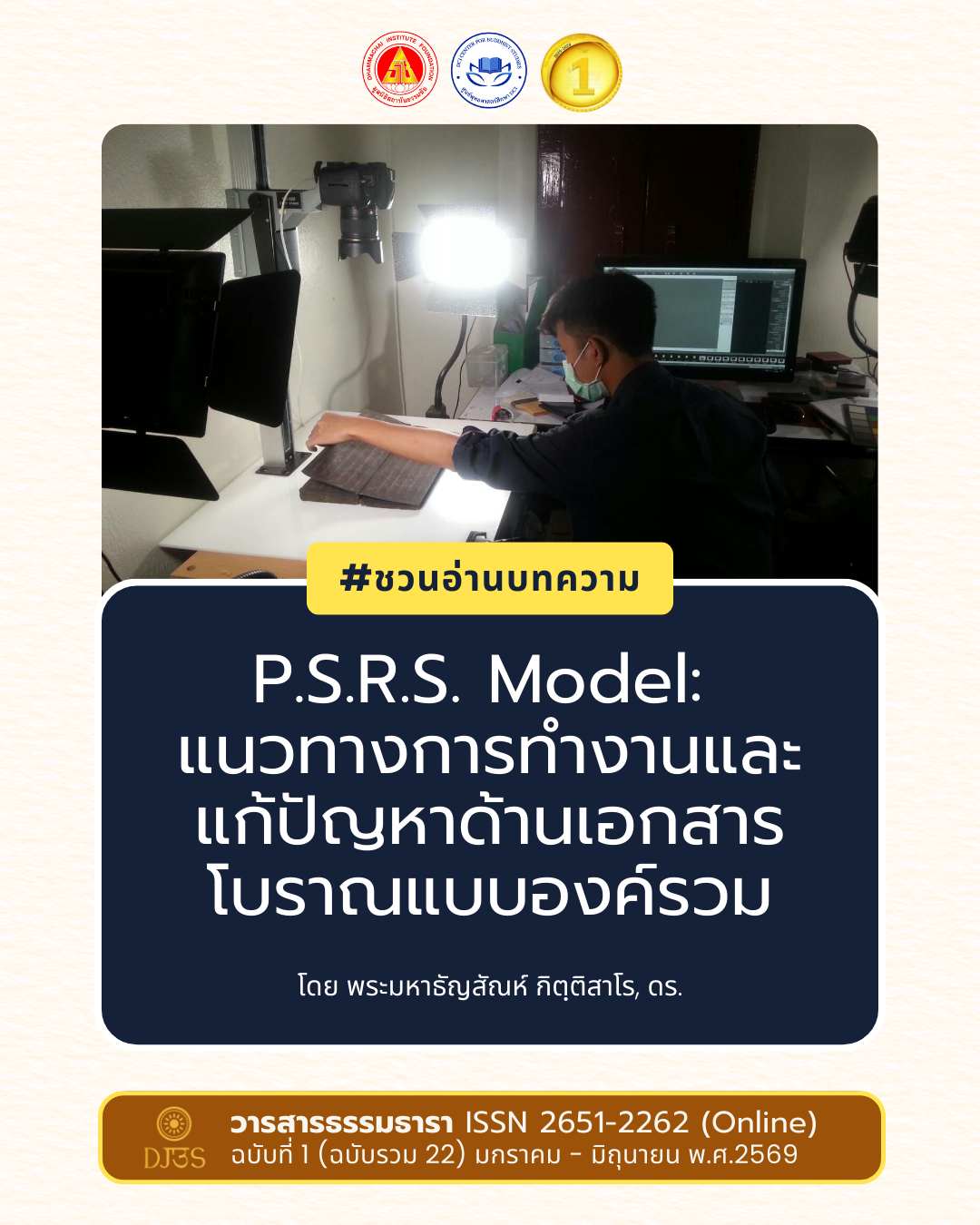
1. The academic article titled “The P.S.R.S. Model: A Framework for a Holistic Approach to Working and Solving Problems in Ancient Manuscripts” by Phramaha Thunsun Kittisaro, Ph.D. This article proposes the P.S.R.S. Model (Preservation, Study, Research, and Sustainability) as a holistic framework for addressing the ongoing deterioration of ancient manuscripts. Emphasizing open IT systems that comply with international standards and the establishment of sustainable networks at the local, national, and international levels, the study offers valuable insights for scholars of palm-leaf manuscripts and other ancient documents.
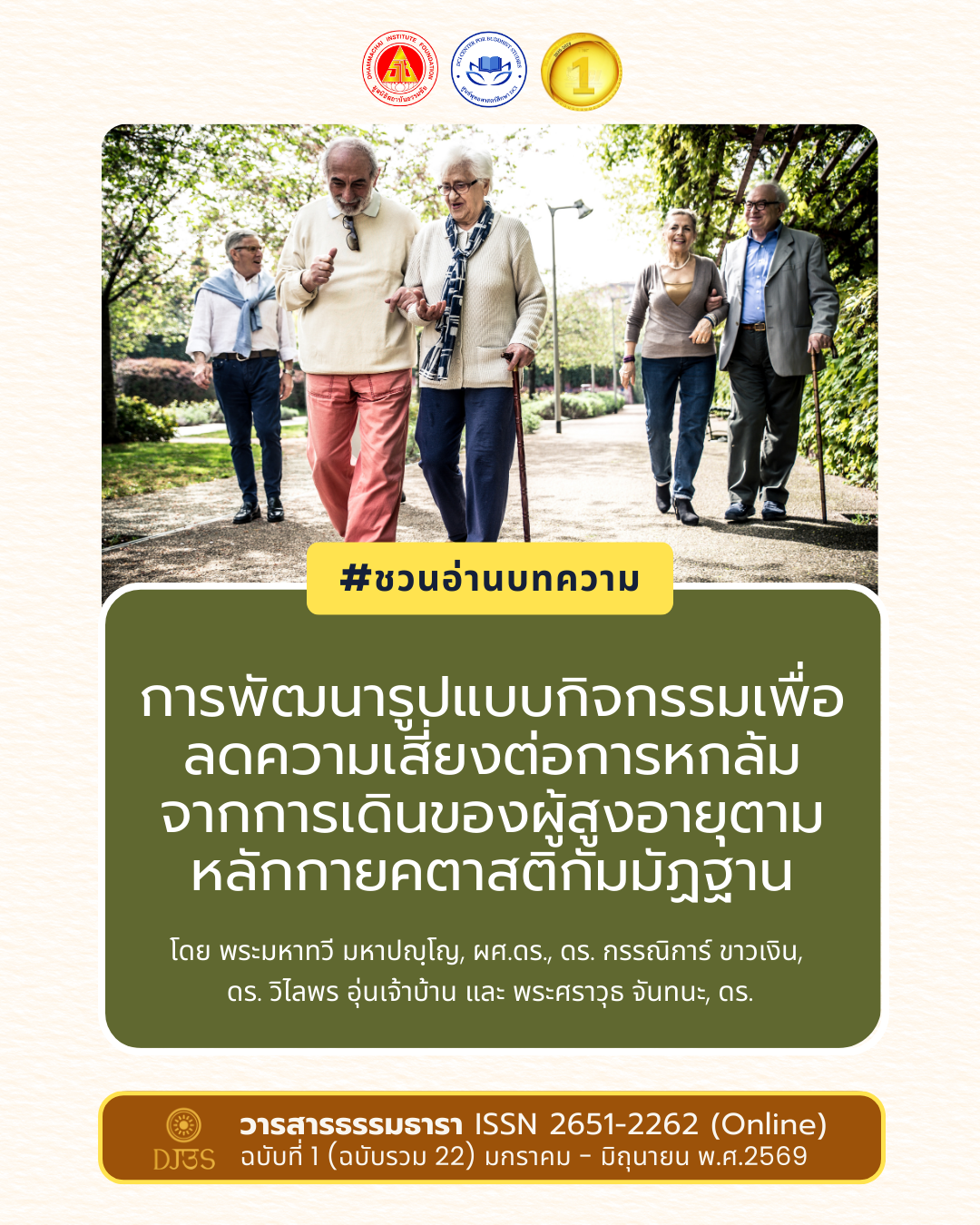
2. The research article titled “An Activity Model Development Based on Kāyagatāsati Kammaṭṭhāna to Reduce the Risk of Falls from Walking in Elderly Adults” by Phramaha Tawee Mahāpañño, Asst. Prof., Ph.D., and team. This study presents the development of an activity model grounded in Kāyagatāsati Kammaṭṭhāna (mindfulness of the body) aimed at reducing fall risk among elderly adults. The findings demonstrate statistically significant improvements in balance and introduce a new body of knowledge, “Six Awareness Practices for Risk Adjustment and Fall Prevention,” emphasizing mindfulness of breathing, minor bodily postures, body contemplation, and age-appropriate nutrition.
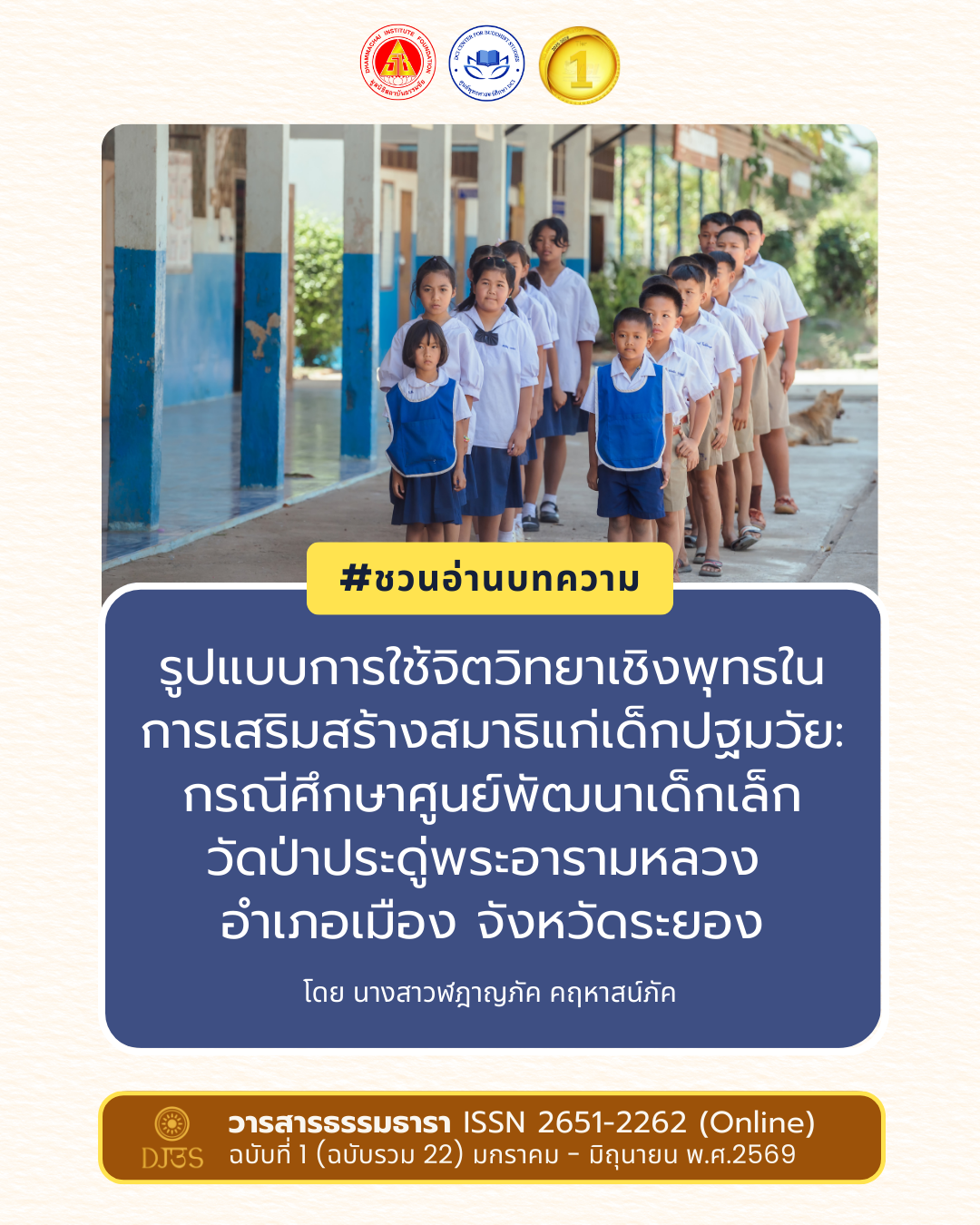
3. An action research article on “A Model for Using Buddhist Psychology to Enhance Concentration in Early Childhood: A Case Study of Wat Pa Pradu Phra Aram Luang Child Development Center, Muang District, Rayong Province” by Ms. Radayaphak Knaruhadphak. This action research develops the “5AB Model,” consisting of five activities aligned with five behavioral groups to enhance concentration and address risk behaviors in early childhood. The results indicate clear positive behavioral outcomes, particularly through “loving-touch mindfulness,” which effectively reduces depression and mental restlessness.
4. A translated article on “Huayanjing jinshizizhang: A Philosophical Translation in Thai and a New Approach to Understanding Avataṃsaka (3)” by Nipon Sasipanudej, Asst. Prof., Ph.D. This article presents a philosophical translation and analysis of The Flower Ornament Golden Lion Treatise (Huayanjing jinshizizhang), elucidating the advanced dialectical method of the Avataṃsaka school. It highlights “emptiness” in all phenomena as “Buddha wisdom” and “prakṛti-prabhāsvara-citta”, the innately pure mind, which serves as the foundation of “tathāgata-garbha” theory.
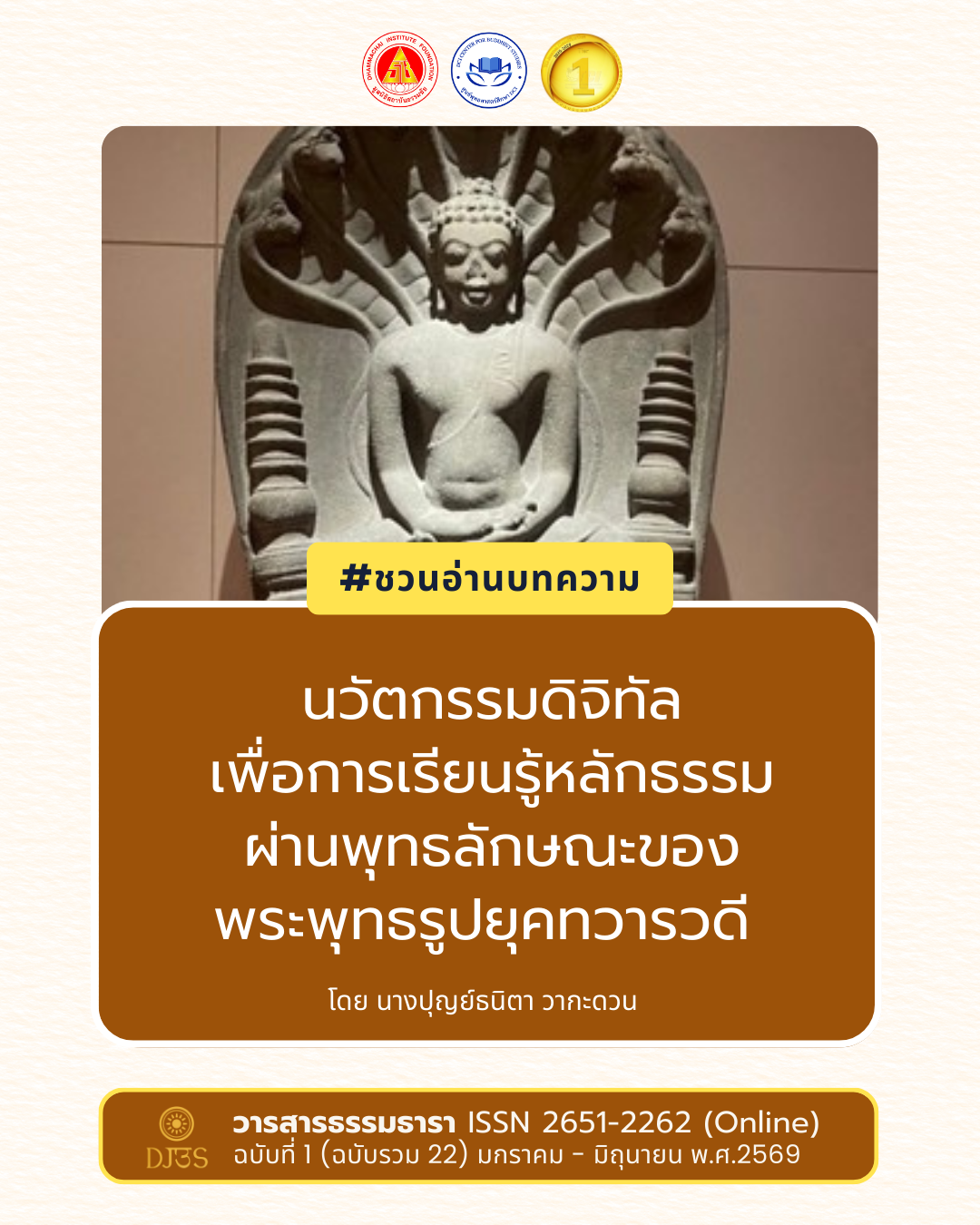
5. The research article titled “Digital Innovation for Learning the Principles of Dharma through the Buddhist Characteristics of the Buddha Statues of the Dvaravati Period” by Ms. Puntanita Wakadoun. This study examines the values of Buddhist teachings embodied in various postures of Dvaravati-period Buddha statues and develops a documentary-based digital innovation entitled “Gateway to the Dvaravati Port”. The innovation effectively communicates moral, mental, artistic-cultural, and social values embedded in Dvaravati Buddhist art and received high levels of audience satisfaction.
6. The research article titled “Knowledge Management: A Decision-Making Process According to Buddhism” by Mr. Setthachat Thanachaikonphisut and team. Integrating the SECI knowledge management model with Buddhist principles of wholesomeness and the Threefold Training (Trisikṣā), this study proposes a new conceptual framework known as Pañcasammā, or the “Pentameric R Model,” which offers five guiding principles for accurate and effective decision-making.
7. The research article titled “The Development of the Thai Buddhist Nuns’ Online Archive for Knowledge Management and Social Value Enhancement” by Kritsana Raksachom, Assoc. Prof., Ph.D., and team. This research highlights the multifaceted contributions of Thai Buddhist nuns to Buddhism, education, and Thai society, while addressing the absence of standardized archival systems. The study proposes the development of an online archive for Thai Buddhist nuns as a knowledge management tool that systematically preserves historical evidence and affirms the role of nuns as vital social capital for national development.
We sincerely hope that this issue will provide readers with both scholarly insight and intellectual enjoyment.
Phragrupalad Suvuttanabodhigun
(Somchai Thanavuddho)
1 January 2026
Published: 2026-01-19
Full Issue
Research Article