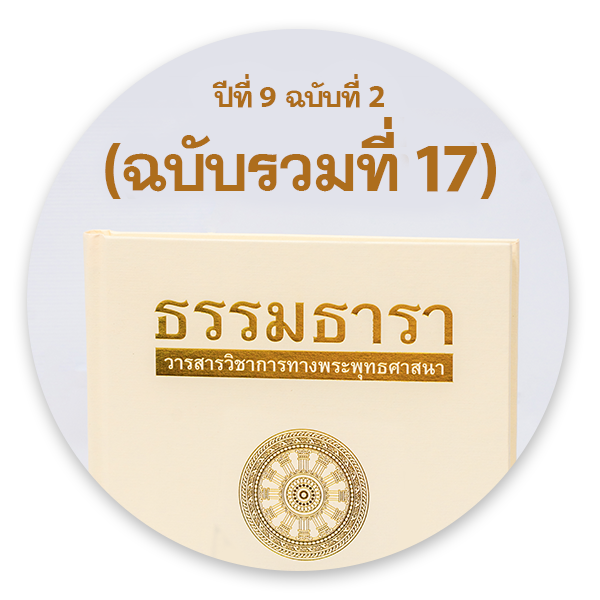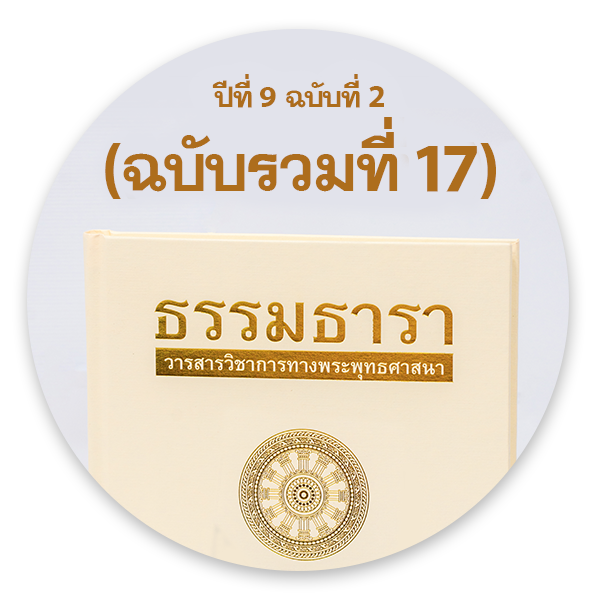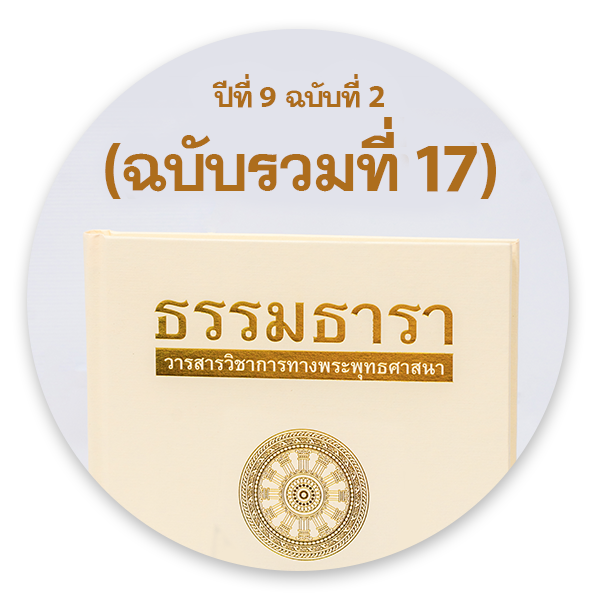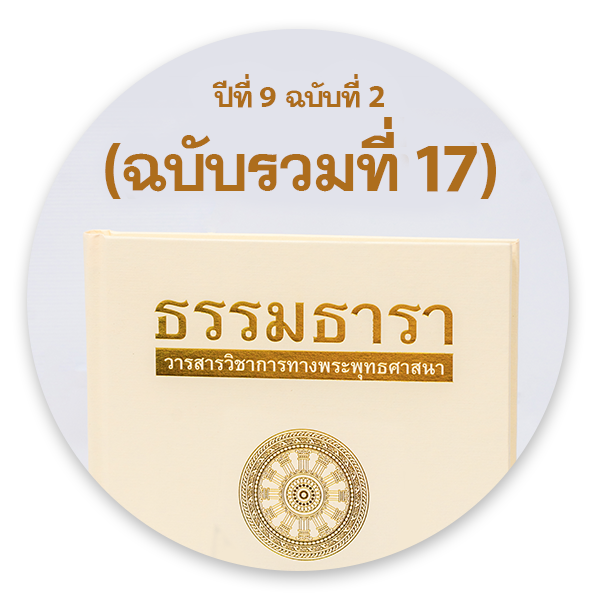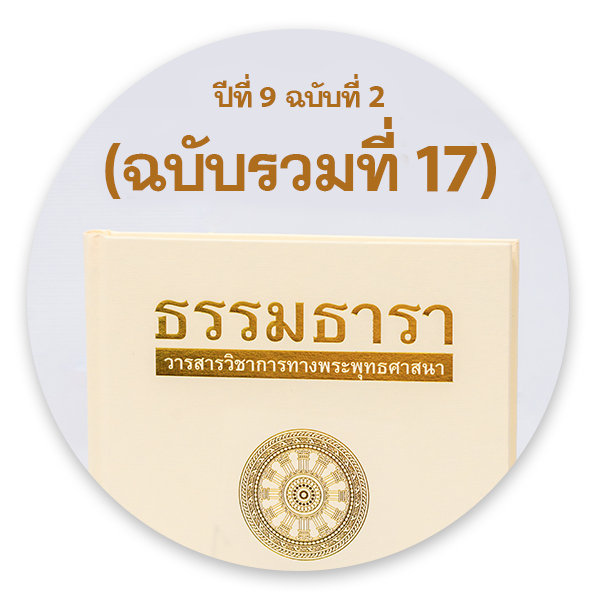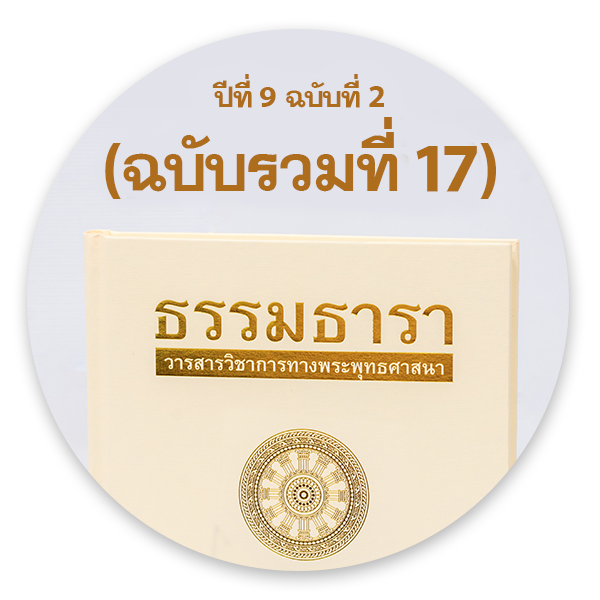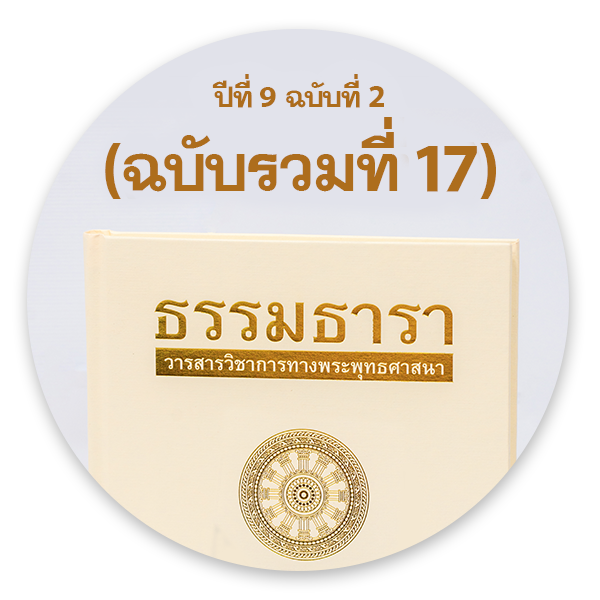
Phra Brahmamoli (Vilat Ñāṅavaro) is a renowned Buddhist monk who has made significant contributions to Buddhist literature in the past 50 years. Particularly, his books “Bhūmivilāsinī,” “Vimuttiratanamālī,” and “Kammadīpanī” have been highly distinguished for their interesting content and eloquent expressions, earning him the prestigious award for excellence in Buddhist literature from Bangkok Bank. I (editor) have been utilizing these books as a valuable resource for study and to disseminate Dhamma teachings since my first ordination 38 years ago. It is unfortunate that currently, his literary works, considered as gems in Buddhist literature, are not widely circulated. This could be due to the modern era where people have access to a plethora of media and information, making it challenging for valuable works to reach a broader audience.
The research article titled “Buddhist Literary Works by Phra Brahmamoli (Vilat Ñāṅavaro)” is written by Phramaha Anukul Ngaongam and Asst. Prof. Dr. Sompornnuch Tansrisook and serves as a comprehensive study of Phra Brahmamoli’s literary works. It can be likened to brushing the dust off a precious gem, with the hope of reigniting people’s interest in his works once again.
The research article “The Buddhist palm-leaf manuscripts in the reign of King Kawila: A case study based on the colophons of the Lanna script manuscripts found at Wat Duang Dee, Mueang Chiang Mai District, Chiang Mai Province” by Phra Amarin Santidhammo and Team, who studied and analyzed the colophons of eight bundles of the DhamLanna script manuscripts created during (1774-1815) in the reign of King Kawila. This study sheds light on the history of palm-leaf manuscripts, the places where they were written, the names of those involved in the process, and the motivating factors behind their creation. It provides valuable insights into the manuscript writing process, the social conditions in Chiang Mai at that time, and a better understanding of the overall process of transmitting teachings in Buddhism through palm-leaf manuscripts.
DhammacakṢu magazine was established during the reign of King Chulalongkorn, Rama V, by His Royal Highness Prince-Patriarch Vajirañāṇavarorasa. The research article “DhammacakṢu magazine (1894-1911): Its background and contents” by Phramaha Saruwut Phosrikham and Asst. Prof. Dr. Natchapol Sirisawas aims to provide insights into the reasons behind the creation of this magazine and its significant content. The magazine’s articles and presentation methods reflect the changes in knowledge, understanding of Buddhism, and the ways of disseminating Buddhist teachings, which had to adapt to the advancing scientific knowledge from the West that flowed into Thailand during that time.
The research article “An Analysis of Gratitude among High School Students: Grounded Theory Study” is brought to us by Janjira Wangwan and Team to provide a better understanding of the conditions required to foster gratitude in adolescents. The study identifies external and internal factors that influence the development of gratitude among high school students. These factors include awareness of the value of received benefits, empathy and compassion, intention to help of the benefactors, and recognition of benefactors’ cost. These factors play a significant role in enhancing the sense of gratitude among young people in the present era, promoting the cultivation of gratitude and ethical values in high school students.
Currently, microplastic pollution is a global environmental crisis, as it contaminates almost all types of drinking water consumed by people worldwide, posing long-term health concerns. The article “Contemporary Meditation and Environment: Sustainable Solution to Solving Problem of Microplastic Pollution” by Ponprom Tippayamontree and Team aims to demonstrate how meditation can offer a sustainable method for addressing environmental issues. By incorporating Buddhist principles as a tool for solving real-world environmental problems, meditation becomes a sustainable approach. In other words, meditation practice may be another option that helps mitigate the problem of microplastic pollution in a sustainable manner and contributes to finding real solutions in the world.
The research article “The Use of the PDCA Quality Cycle in Administration that Affects Academic Administration of Schools in the Sarasas Affiliated Schools” by Chutipon Tootanabat and Dr. Niptipholt Sanitlou. The duo conducted a qualitative research study to investigate the utilization of the PDCA (Plan-Do-Check-Act) quality cycle in the academic administration of Sarasas Affiliated Schools, along with its application to Buddhist principles in the quality management process. Their research helps to understand the management and development processes of academic administration, which is a crucial foundation for the success of schools within the Sarasas Affiliated Schools network. This network has expanded to include 49 schools amid the crisis of student shortages in schools nationwide.
We earnestly hope that each and every reader shall acquire knowledge, diverse perspectives, and utmost pleasure while perusing, akin to their previous experiences.
Phragrupalad Suvuttanabodhigun
(Somchai Thanavuddho)
2 August 2023
Buddhist Lent Day.
Published: 2023-08-17
Full Issue
Research Article