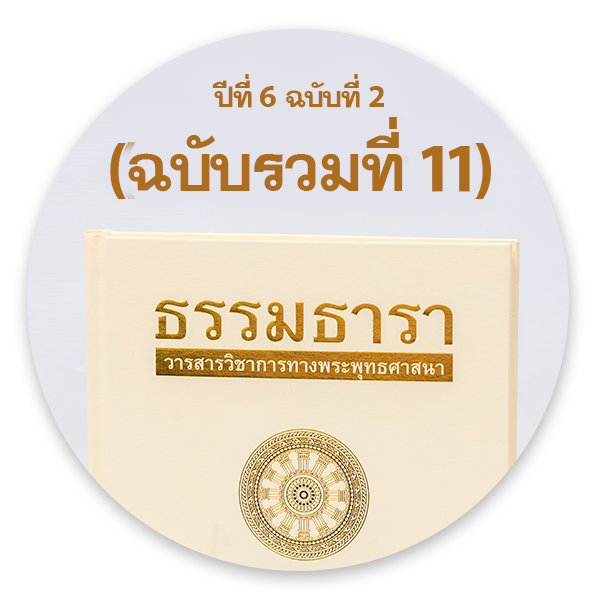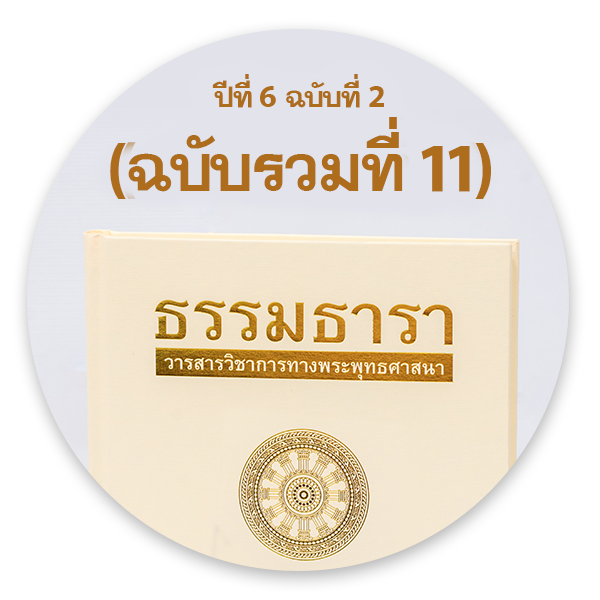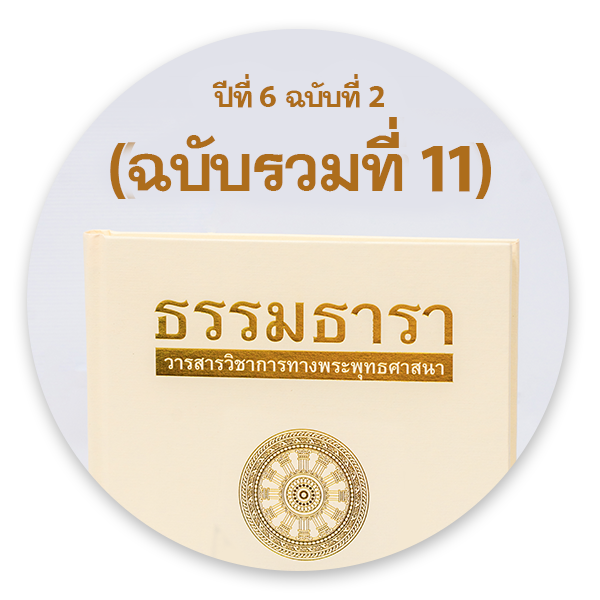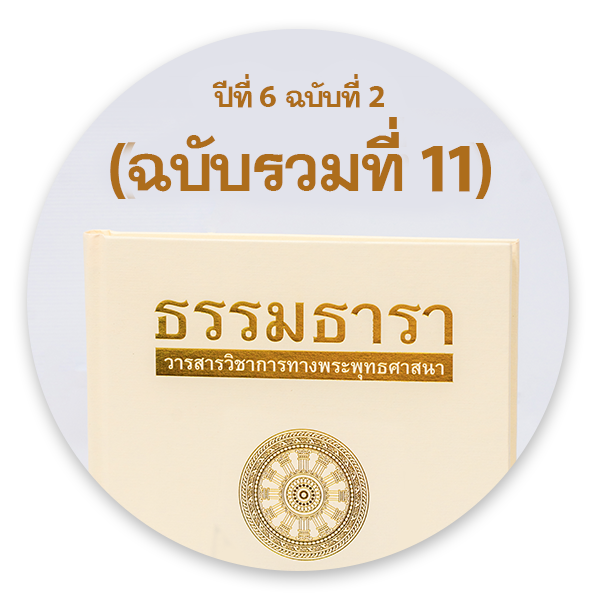
This issue of Dhammadhara journal contains various new content, starting with the article “The Story of Erakapatta the Nāga King Part I: A comparative study of Pali context with other Buddhist scriptures” by Mr. Chakhrit Laemmuang, who has completed comparative studies of the contents on parallel texts from different scriptures, including in Pāli, Sanskrit, Chinese and Tibetan. These texts are very good examples to show the benefits of parallel scripture study and will help us to understand the contents better, but interested researchers must first be proficient in the languages of scriptures, as these are Pāli, Sanskrit, Chinese and Tibetan.
The Article “Virgin Births (Parthenogenesis): A comparison between Buddhist and Scientific Views” by Dr. Sermsuk Vijarnsathit, a specialist on both modern medicine and Buddhism. Interestingly, the findings of the study predict a possibility that advances in medical science will lead to virgin births, as mentioned in Buddhism scripture.
The article “A Conceptual Model of Bi-dimensional Development for Happiness Access by Biofeedback Process” by Asst. Prof. Dr. Sanu Mahatthanadull and group advises us to use medical science equipment in order to provide quick and accurate biological feedback in order to help improve the progress of Dharma practices.
The article “ Mahāyāna Buddhism: Reasons for Diversity in the Buddha’s Teachings (2)” was written by Prof. Dr. Sakaki Shizuka, a specialist on Theravāda Buddhism from Japan, and has been transcribed in Thai by Phramaha Pongsak Thaniyo, Ph.D.. This article follows on from the first part that was published in the 10th issue of Dhammadhara journal. The key finding is that the historical adjustment of the definition of “saṅghabheda.” lead to Buddhism’s acceptance of varying concepts, as long as the monastic community still continued to perform a joint synod.
The article “Narokbhūm in Traibhūm-Phramalai: A text significantly related to Buddhist scripture” written by Mr. Phakphon Sangngern and Dr. U-tain Wongsathit, presents how Traibhum has been a reference for important concepts and has had a great influence since ancient times in Thai society. This article explores the relationship of the content of hell in the Traibhum-Phramalai, which is known as earth scientific literature of the Ayutthaya period, and the contents of the Tipitaka, Lokadīpakasāra, Lokapaññatti and Cakkavāladīpanī (Cosmological literature), and found that the main content differs in only small details.
I hope the readers will gain every benefit from each article in this issue of the Dhammadhara Journal as appropriate.
Phragrupalad Suvattanabodhigun
(Somchai Thanavuddho)
5 July 2020
Asalha Puja day
Published: 2020-07-14