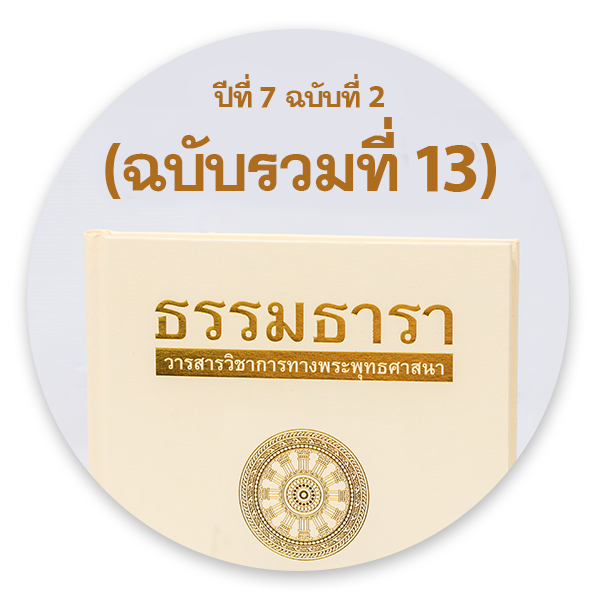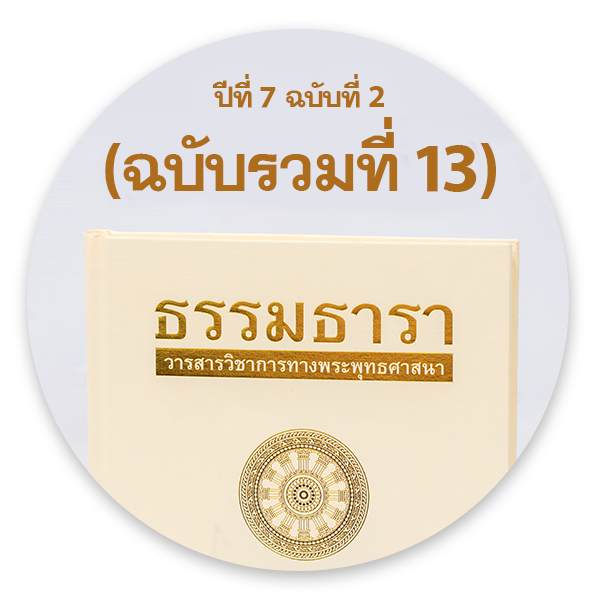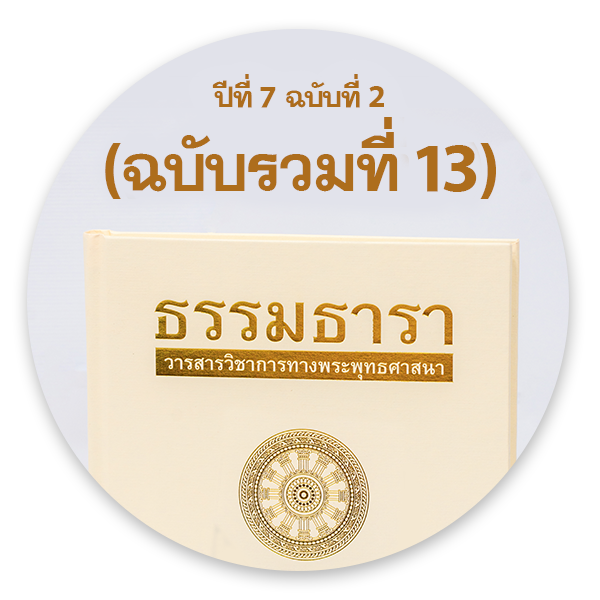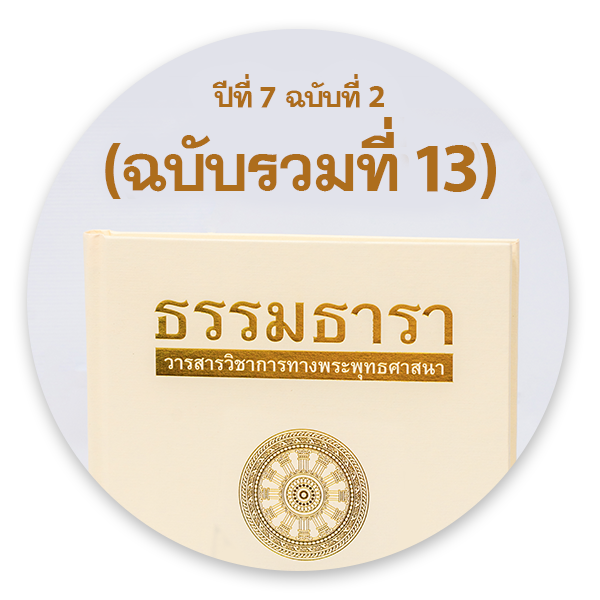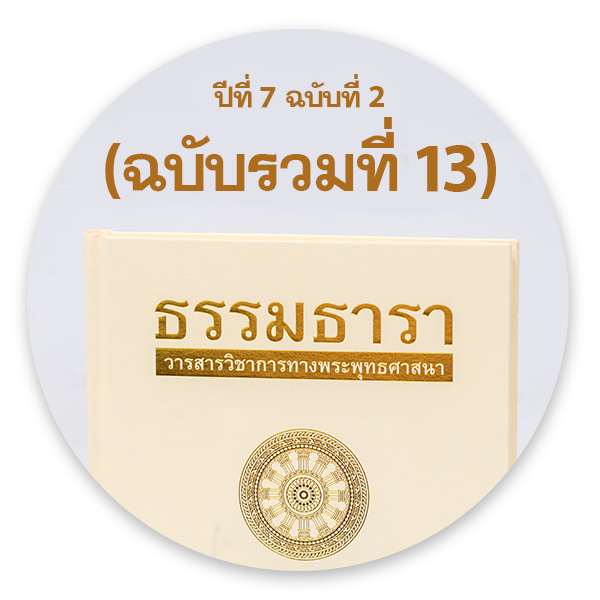
In this Dhammadhara Journal, all readers will find something interesting among the following topics:
The academic article “The System of Learning and Teaching Kammathāna in Visuddhimagga” is by Phramaha Wutthichai Wuttichaya, Ph.D., who has studied and analyzed the contents of the Visuddhimagga Scriptures in detail. In his most recent work, he has clearly summarized the content as a practical system for the path of attaining nirvana in a way that is easy to understand. Such a systematic guide will be of immense help to people wanting to practice the path of liberation in Buddhism.
The article “Mahāyāna Buddhism: Reasons for Diversity in the Buddha’s Teachings (4)” is from Professor Dr. Sasaki Shizuka, has been translated to Thai language by Phramaha Pongsak Thaniyo, Ph.D. This is the fourth installment in a series, and it explains the difference between the concept of “śūnyatā” in the ideologies of Theravāda Buddhism and early Mahāyāna Buddhism.
The research article “The Notion of Antarābhava in Abhidhamma Traditions (1)” is Dr. Prapakorn Panassit’s analysis of the subject of whether “Antarābhava”, the intermediate state between death and rebirth, exists or not. By providing reasoning and evidence from scriptures of various sects, there are robust proofs for the case that it exists and the case that it does not exist. The given reasons themselves provide a great insight on the thinking, interpreting and arguments from various sects. This is a great comparative study of the scriptures from each sect. Moreover, reading this article will allow us to understand controversial viewpoints more perceptively.
The new research article “A comparative analysis of the Pāli and Chinese Buddhist text versions of Siṅgālaka Sutra” is by Dr. Wilaiporn Sucharitthammakul. She has completed a comparative analysis of the contents of the Siṅgālaka Sutra of Pāli scriptures against the Chinese scriptures, using a total of ten texts. The study found that the content was up to 75% consistent. Mostly, the difference came from the sorting of contents that caused a mismatch between texts, and some missing content. Another benefit of this comparative analysis of these parallel scriptures is the traces of their origin and succession.
The journal would not be complete without the new article “Venerable Mahākaccāyana in Various Documents, Part I: A Viewpoint that he is the same person as Venerable Nālaka” by Mr. Chakrit Laemmuang, who has studied the story of Venerable Mahākaccāyana and Venerable Nālaka in the scriptures of various sects from a whole ten editions. The study investigates the mystery of how some writers consider these two Buddhist monks to be the same person. The two had the same family name, “kaccāyana”, for example, but thorough reading reveals Buddhist monks are indeed different people. Beyond the interesting conclusions, all readers will also understand how to study and analyze data from Buddhist scriptures of various sects. This will lead to problem-solving skills and a wider perspective when looking at problems in Buddhism.
We hope that all readers will gain knowledge, ideas and inspiration for working on Buddhist Research Methodology, and enjoy from the articles in this Dhammadhara journal as appropriate.
Phragrupalad Suvattanabodhigun (Somchai Thanavuddho)
24 July 2021
Asaḷha Puja Day
Published: 2021-07-24