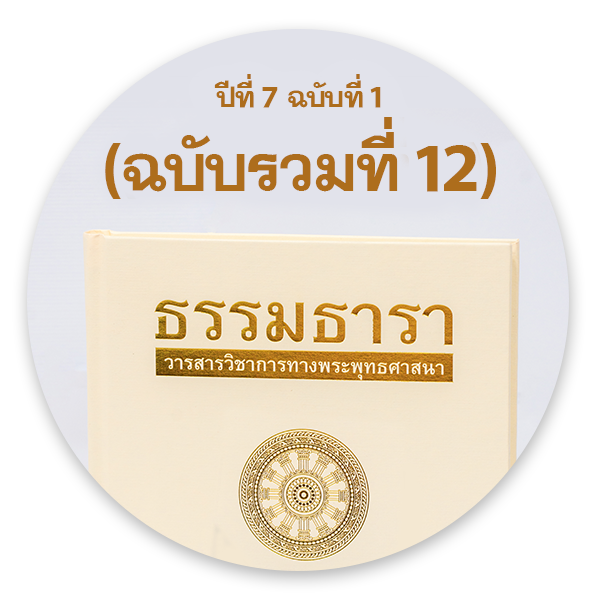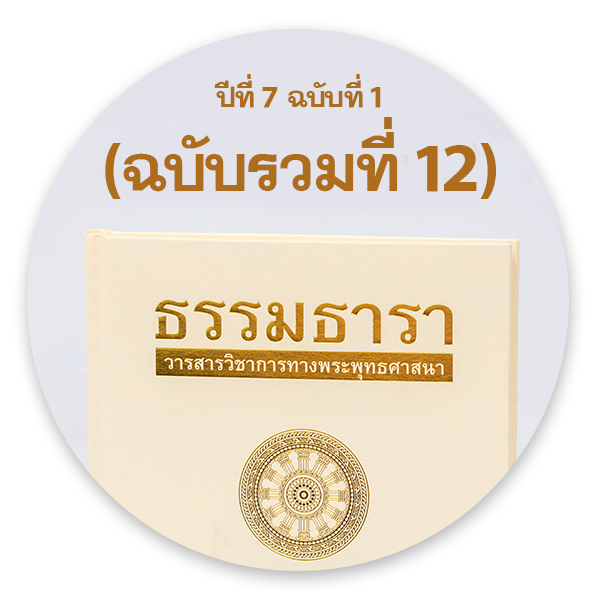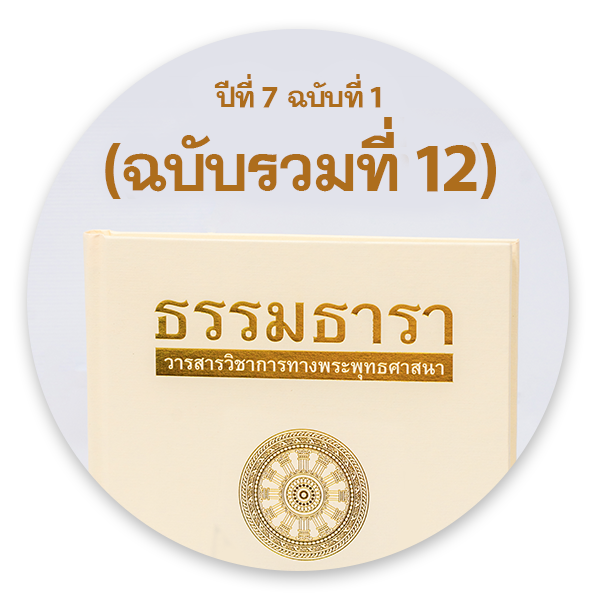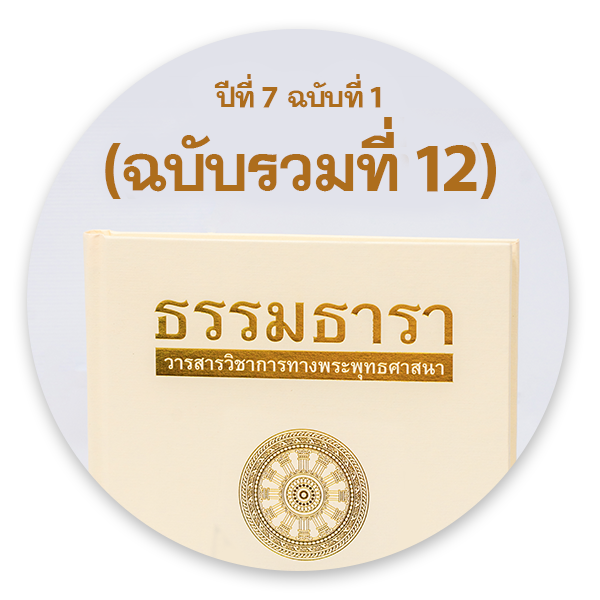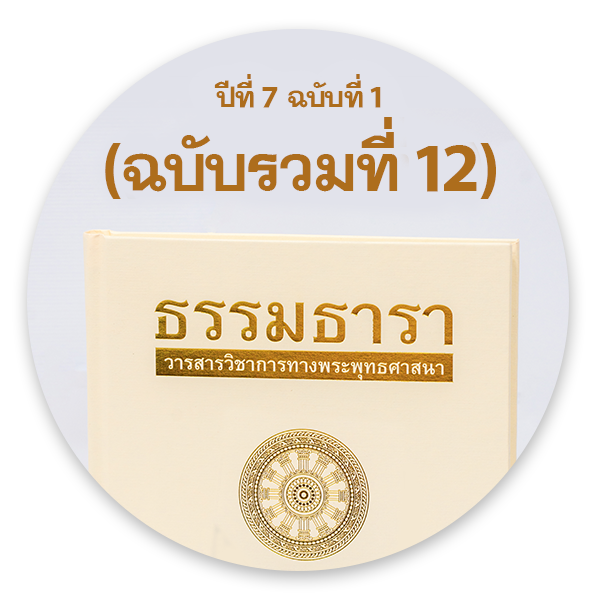
This is the publication of the 12th Dhammadhara Journal, which contains both scriptural research and applied Dhamma contents to respond to the wide variety of readers. Since ancient times, Siam (Thailand) has considered the Khom Scripts as a script for inscribing the manuscripts. Most of Siam Pāli manuscripts in Tipitaka, and other commentaries were all inscribed in the Khom scripts. So, it is very interesting to study whether the Khom manuscripts, found in both Siam (Thailand) and Khmer (Cambodia) belong to the same lineage, and whether they have any significant differences. You will find the answers from Dr. Suchada Srisetthaworakul in the article “Comparison of the Khom Script Manuscripts of the Majjhimanikāya Found in Thailand and Cambodia”.
Contents of parallel manuscripts are mostly coherent in different languages. A comparative study of parallel manuscripts is a high level of scriptural research that still not widely researched in Thailand because the researchers must have the fields of knowledge on scriptural languages to read the manuscripts, such as Pāli, Sanskrit, Chinese and Tibetan. Also, the researchers must have a basic knowledge of history on the development of the manuscripts. This is very useful because it will allow us to see the traces of the development of contents in each manuscript, and it will raise the issue of widespread thinking in research from the different points of the parallel manuscript.
The article “The Story of Erakapatta the Nāga King Part II: A Study of Corresponding Stanzas in Various Versions and Analysis of Sculpture at Bharhut” by Mr. Chakhrit Laemmuang, is one of the very fine examples of a comparative study of the parallel manuscript. He is fluent in Pāli (Pāli Studies Level 8) as well as knowledgeable in Kaccāyana’s Pāli Grammar. He graduated from Mahachulalongkornrajavidyalaya University Palisuksa Buddhagosa Campus Nakhornpathom, Thailand. Later, he studied at Peking University for more than 10 years until he completed his master degree and currently obtaining his Ph.D. Therefore, he is fluent in Chinese, Tibetan and Sanskrit languages, as well as being a researcher with outstanding research skills. The results of his research led him to win numerous excellence awards from Peking University. Readers will have new perspectives with extensive research in Buddhist scriptural research widely.
The article “Mahāyāna Buddhism: Reasons for Diversity in the Buddha’s Teachings (3)” was written by Prof. Dr. Sakaki Shizuka, the expert on Theravāda Buddhism as well as possessing extensive knowledge in Mahāyāna Buddhism, and has been transcribed in Thai by Phramaha Pongsak Thaniyo, Ph.D. This article is a Question - Answer dialogue with the participants from the famous literature in 100 minutes of NHK television channel in Japan. This leads us for better understanding to the concepts of Early Mahāyāna from the earliest Mahāyāna manuscripts, Prajñāpāramitā Sūtras.
The article “An Analytical Study of Rebirth Consciousness in the View of the Theravāda Buddhism” by Mr. Chinawatchara Nilnatr, analyzes the rebirth consciousness and the relationship with the concept of Paṭiccasamuppāda which covers three lifetimes that leads to a better understanding of the principle of Paṭiccasamuppāda.
The article “An Analysis of Gratitude in Theravāda Buddhism” by Asst. Prof. Amnat Sa-nguanklang, studies the meaning, principles and importance of gratitude. The readers will gain a clearer understanding of gratitude, which is one of the most important virtue of society.
Life coaching is a new trend which becomes more popular in Thai and world societies. The article “Life Coaching: A View from Buddhist Psychotherapy and Counseling” by Asst. Prof. Dr. Sanu Mahatthanadull, conducts the principles in Buddhism to analyze and apply in life coaching. This is a good example of the study of applied Buddhist teachings in modern society. We hope all readers will gain benefit from the articles in this issue as always.
Phragrupalad Suvattanabodhigun
(Somchai Thanavuddho)
1 January 2021
(New Year’s Day)
Published: 2021-01-28
Research Article